
PMS in text usually means “premenstrual syndrome,” a group of physical and emotional symptoms that can happen before a menstrual period. In casual messages, people may use “PMS,” “PMSing,” or “PMS mood” to talk about symptoms, tiredness, cramps, mood changes, or feeling more emotional. The exact meaning still depends on context.
The abbreviation PMS is pronounced by saying each letter: “P-M-S.” The standard English meaning is premenstrual syndrome. Cambridge Dictionary, Oxford Learner’s Dictionaries, and other major reference sources define PMS this way.
PMS can involve physical symptoms such as bloating, headaches, cramps, breast tenderness, and tiredness. Emotional symptoms can include irritability, anxiety, sadness, mood changes, or trouble concentrating. Symptoms can vary greatly from person to person.
PMS Meaning at a Glance
| Term | Meaning | Typical context |
|---|---|---|
| PMS | Premenstrual syndrome | Health, texting, casual conversation |
| PMSing | Experiencing PMS symptoms | Casual texting and social media |
| PMS mood | Mood associated with PMS | Informal conversation |
| PMT | Premenstrual tension | More common in British English |
| PM | Private message | Online communication |
| PMs | Private messages | Forums, social media, chats |
| DM | Direct message | Social media |
| PMDD | Premenstrual dysphoric disorder | Medical context |
| PMSL | “Pissing myself laughing” | British informal slang; unrelated to PMS |
The key point: If someone writes “PMS,” the safest standard interpretation is premenstrual syndrome. If they write “PMs” in a message such as “Check your PMs,” they usually mean private messages.
That small difference in capitalization can prevent a very awkward misunderstanding.
Why We Use “PMS” in Text
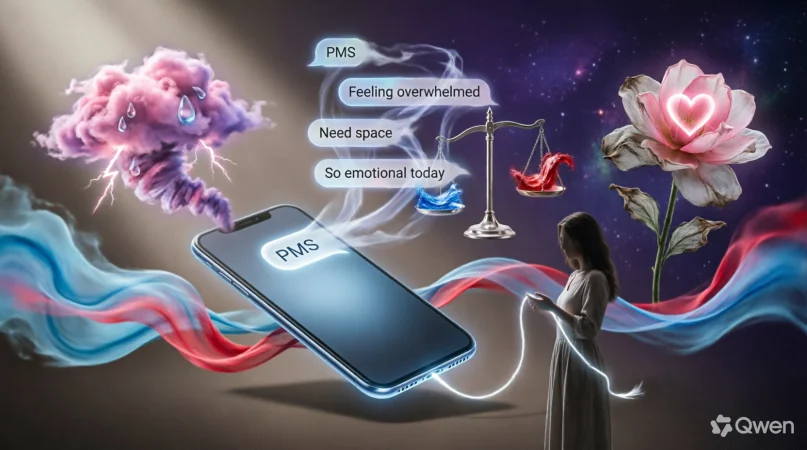
People use PMS in text because it is a short, familiar way to talk about premenstrual symptoms without writing the full phrase “premenstrual syndrome.” It is especially common in personal conversations, health discussions, social media posts, jokes, and messages about mood, cramps, tiredness, food cravings, or an upcoming period.
Practical purpose
Text messages are fast. People often shorten familiar terms to save time.
Instead of:
“I am experiencing premenstrual syndrome today.”
someone might simply write:
“I have PMS today.”
That sounds much more natural.
Everyday usage
PMS may appear when someone explains:
- why they feel tired
- why they have cramps
- why they feel bloated
- why they are more emotional
- why they have food cravings
- why they need rest
- why their mood has changed
- why they expect their period soon
However, PMS should not automatically be used as an explanation for another person’s behavior.
For example:
“You’re angry, so you must have PMS.”
can sound rude, dismissive, or sexist.
A better approach is to let the person explain how they feel.
Writing
In writing, PMS is useful when the audience already understands the abbreviation.
Example:
“She tracks her PMS symptoms each month.”
For a formal medical document or a general audience, write the full term first:
“Premenstrual syndrome (PMS) can cause physical and emotional symptoms.”
After that, PMS can be used on its own.
Speaking
People say the letters individually:
“P-M-S.”
They generally do not pronounce PMS as a normal word.
School
Students may encounter PMS in:
- health classes
- biology
- nursing
- psychology
- women’s health
- reproductive health lessons
In school assignments, define the abbreviation the first time you use it.
Social media
PMS also appears in captions, memes, comments, and casual posts.
For example:
“PMS week has arrived. I need snacks.”
This is informal and humorous. It does not mean that every person experiences PMS in the same way.
Professional communication
PMS can be appropriate in a medical or workplace context when the topic is relevant and the audience understands the term.
But you should avoid using PMS casually to explain a coworker’s mood.
Pro Tip: In professional writing, focus on the actual issue rather than assuming a person’s behavior is caused by PMS.
Main Section: 60 Natural Examples of PMS in Text
The easiest way to understand PMS in texting is to see how the abbreviation works in real sentences. The examples below cover health conversations, friends, family, dating, school, social media, work, and everyday chat. Most are informal because PMS is far more likely to appear casually than as unexplained workplace slang.
Example 1: “I have PMS.”
Meaning: The person is experiencing premenstrual symptoms.
Real explanation: This is one of the clearest ways to use PMS. The sender is directly saying that they are experiencing symptoms before their period.
Sample sentence: “I have PMS, so I’m feeling pretty tired today.”
When to use it: Casual conversations with people you trust.
When NOT to use it: Formal writing without explaining the abbreviation.
Alternatives: “I’m having PMS symptoms.” / “I’m dealing with premenstrual symptoms.”
Difficulty: Easy
Tone: Informal
Example 2: “I’m PMSing.”
Meaning: The person is experiencing PMS symptoms.
Real explanation: “PMSing” is an informal verb formed from PMS. It is common in casual texting but is not the best choice for formal writing.
Sample sentence: “Sorry I’m so tired—I’m PMSing.”
When to use it: Friendly chats and casual social media.
When NOT to use it: Formal reports, academic writing, or professional medical documents.
Alternatives: “I’m having PMS symptoms.” / “I’m experiencing PMS.”
Difficulty: Easy
Tone: Informal
Example 3: “My PMS is bad today.”
Meaning: The person’s PMS symptoms feel strong today.
Real explanation: The speaker is describing the severity of their symptoms without listing each one.
Sample sentence: “My PMS is bad today, so I’m going to take it easy.”
When to use it: Personal conversations.
When NOT to use it: When you need precise medical information.
Alternatives: “My symptoms are strong today.” / “My PMS symptoms are bothering me.”
Difficulty: Easy
Tone: Informal
Example 4: “PMS is killing me.”
Meaning: The person’s PMS symptoms feel very uncomfortable.
Real explanation: “Killing me” is an exaggeration used to emphasize discomfort. It does not normally mean the person is literally in danger.
Sample sentence: “These cramps—PMS is killing me today.”
When to use it: Casual conversation.
When NOT to use it: Serious medical communication.
Alternatives: “PMS is really painful today.” / “My symptoms are really bad.”
Difficulty: Easy
Tone: Informal
Example 5: “PMS mood.”
Meaning: A mood the sender associates with PMS.
Real explanation: This short phrase often appears in captions or memes. It may describe irritability, sadness, tiredness, or emotional sensitivity.
Sample sentence: “PMS mood: I want to stay in bed all day.”
When to use it: Social media and casual messages.
When NOT to use it: Formal communication.
Alternatives: “PMS mood today.” / “Feeling emotional today.”
Difficulty: Easy
Tone: Informal
Example 6: “PMS week.”
Meaning: The period of time when someone expects or experiences PMS symptoms.
Real explanation: This is an informal phrase, not a precise medical term. PMS symptoms can vary in timing and severity.
Sample sentence: “It’s PMS week, so I’m feeling a little off.”
When to use it: Casual conversation.
When NOT to use it: Medical diagnosis.
Alternatives: “The days before my period.” / “My premenstrual days.”
Difficulty: Easy
Tone: Informal
Example 7: “Sorry, PMS.”
Meaning: The sender is casually attributing their mood or symptoms to PMS.
Real explanation: This is very brief. The surrounding conversation is important because “PMS” alone does not explain exactly what the person is experiencing.
Sample sentence: “Sorry for being emotional earlier. PMS.”
When to use it: Close, casual conversations.
When NOT to use it: If the other person may not understand the abbreviation.
Alternatives: “Sorry, I’m having PMS symptoms.” / “Sorry, I’m feeling emotional today.”
Difficulty: Easy
Tone: Informal
Example 8: “PMS got me tired.”
Meaning: PMS is making the person feel tired.
Real explanation: The grammar is intentionally casual. “Got me tired” is conversational rather than formal English.
Sample sentence: “PMS got me tired today. I’m going to bed early.”
When to use it: Texting friends.
When NOT to use it: Formal writing.
Alternatives: “PMS is making me tired.” / “I’m tired from PMS symptoms.”
Difficulty: Easy
Tone: Informal
Example 9: “PMS got me crying.”
Meaning: The sender feels more tearful or emotional and connects it with PMS.
Real explanation: This is common social-media-style language. It should not be interpreted as proof that PMS is the only reason someone is crying.
Sample sentence: “PMS got me crying over that movie.”
When to use it: Casual chats and posts.
When NOT to use it: When making a medical claim.
Alternatives: “I’m extra emotional today.” / “I feel more sensitive today.”
Difficulty: Easy
Tone: Informal
Example 10: “PMS cravings are real.”
Meaning: The sender is talking about food cravings associated with PMS.
Real explanation: Appetite changes and food cravings can occur with PMS.
Sample sentence: “PMS cravings are real. I could eat an entire pizza.”
When to use it: Casual messages and social media.
When NOT to use it: Formal health writing without context.
Alternatives: “I’m craving everything today.” / “My appetite is different this week.”
Difficulty: Easy
Tone: Informal
Example 11: “I think PMS is starting.”
Meaning: The sender believes PMS symptoms are beginning.
Real explanation: “I think” makes the statement personal rather than a medical diagnosis.
Sample sentence: “I think PMS is starting because I’ve been tired and bloated.”
When to use it: Personal conversations.
When NOT to use it: Diagnosing someone else.
Alternatives: “I think I’m getting PMS symptoms.” / “I’m starting to notice premenstrual symptoms.”
Difficulty: Easy
Tone: Neutral
Example 12: “PMS again.”
Meaning: The sender is saying that PMS symptoms have returned.
Real explanation: This is a fragment, which is normal in texting.
Sample sentence: “PMS again. No wonder I’m exhausted.”
When to use it: Casual texts.
When NOT to use it: Formal sentences.
Alternatives: “My PMS is back.” / “I’m having PMS symptoms again.”
Difficulty: Easy
Tone: Informal
Example 13: “I’m dealing with PMS.”
Meaning: The person is experiencing PMS symptoms.
Real explanation: This is slightly more neutral than “I’m PMSing.”
Sample sentence: “I’m dealing with PMS, so I may go home early.”
When to use it: Friends, family, or coworkers when appropriate.
When NOT to use it: When the topic is unrelated.
Alternatives: “I’m having PMS symptoms.” / “I’m not feeling well before my period.”
Difficulty: Easy
Tone: Neutral
Example 14: “PMS symptoms are annoying.”
Meaning: The sender finds their symptoms uncomfortable or frustrating.
Real explanation: “Annoying” describes the person’s experience without claiming that PMS is medically dangerous.
Sample sentence: “PMS symptoms are annoying this month.”
When to use it: Everyday conversation.
When NOT to use it: Formal medical documentation.
Alternatives: “My symptoms are uncomfortable.” / “PMS has been difficult this month.”
Difficulty: Easy
Tone: Informal
Example 15: “My PMS is gone.”
Meaning: The sender’s PMS symptoms have improved or ended.
Real explanation: PMS symptoms commonly improve after menstruation begins.
Sample sentence: “My PMS is finally gone, and I feel normal again.”
When to use it: Personal conversation.
When NOT to use it: As a medical conclusion about another person.
Alternatives: “My symptoms have gone away.” / “I’m feeling better now.”
Difficulty: Easy
Tone: Neutral
Example 16: “PMS and no sleep.”
Meaning: The sender is connecting PMS with poor sleep.
Real explanation: Sleep problems can occur as part of PMS.
Sample sentence: “PMS and no sleep—great combination.”
When to use it: Casual texting.
When NOT to use it: Formal writing.
Alternatives: “I’m having PMS symptoms and sleeping badly.” / “PMS is affecting my sleep.”
Difficulty: Easy
Tone: Informal
Example 17: “PMS headache today.”
Meaning: The sender is describing a headache they associate with PMS.
Real explanation: Headaches can be among the physical symptoms associated with PMS.
Sample sentence: “PMS headache today. I need some quiet.”
When to use it: Personal messages.
When NOT to use it: Diagnosing another person’s headache.
Alternatives: “I have a headache before my period.” / “I’m dealing with a premenstrual headache.”
Difficulty: Easy
Tone: Informal
Example 18: “PMS cramps are awful.”
Meaning: The sender is complaining about cramps they associate with their premenstrual symptoms.
Real explanation: Cramping can occur around the menstrual cycle, although not every person experiences it.
Sample sentence: “PMS cramps are awful today.”
When to use it: Personal conversations.
When NOT to use it: Generalizing that everyone has cramps.
Alternatives: “My cramps are bad today.” / “I’m having premenstrual cramps.”
Difficulty: Easy
Tone: Informal
Example 19: “PMS makes me emotional.”
Meaning: The sender feels more emotional during PMS.
Real explanation: Emotional changes can be part of PMS, although experiences differ.
Sample sentence: “PMS makes me emotional sometimes.”
When to use it: Self-description.
When NOT to use it: Explaining another person’s emotions without asking.
Alternatives: “I feel more emotional before my period.” / “My mood changes around my period.”
Difficulty: Easy
Tone: Neutral
Example 20: “I’m sensitive because of PMS.”
Meaning: The person feels more emotionally sensitive and connects it to PMS.
Real explanation: “Sensitive” can refer to feeling easily upset, emotional, or affected by things.
Sample sentence: “I’m a little sensitive because of PMS today.”
When to use it: Personal conversations.
When NOT to use it: As an excuse for hurting someone.
Alternatives: “I’m feeling sensitive today.” / “I’m more emotional than usual.”
Difficulty: Easy
Tone: Neutral
Example 21: “PMS is hitting hard.”
Meaning: PMS symptoms feel particularly strong.
Real explanation: “Hitting hard” is slang for something having a strong effect.
Sample sentence: “PMS is hitting hard this month.”
When to use it: Casual texts.
When NOT to use it: Formal writing.
Alternatives: “My symptoms are strong.” / “PMS is affecting me a lot.”
Difficulty: Easy
Tone: Informal
Example 22: “PMS day.”
Meaning: A day when someone is experiencing PMS symptoms.
Real explanation: It is a short social-media-style phrase.
Sample sentence: “PMS day. Coffee first.”
When to use it: Captions and casual messages.
When NOT to use it: Formal communication.
Alternatives: “A rough PMS day.” / “A premenstrual day.”
Difficulty: Easy
Tone: Informal
Example 23: “PMS is ruining my day.”
Meaning: The sender feels that PMS symptoms are making the day difficult.
Real explanation: “Ruining my day” is usually emotional exaggeration, not a literal statement.
Sample sentence: “PMS is ruining my day. I’m exhausted.”
When to use it: Casual conversation.
When NOT to use it: Serious reports.
Alternatives: “PMS is making today difficult.” / “I’m having a rough day with PMS.”
Difficulty: Easy
Tone: Informal
Example 24: “I need chocolate. PMS.”
Meaning: The sender jokingly connects a chocolate craving with PMS.
Real explanation: This is a humorous, informal use.
Sample sentence: “I need chocolate. PMS.”
When to use it: Friends and social media.
When NOT to use it: Formal communication.
Alternatives: “I’m craving chocolate.” / “PMS cravings are strong today.”
Difficulty: Easy
Tone: Playful
Example 25: “PMS has me irritated.”
Meaning: The sender feels more irritable during PMS.
Real explanation: Irritability is one symptom associated with PMS.
Sample sentence: “PMS has me irritated over everything today.”
When to use it: Casual self-description.
When NOT to use it: Blaming someone else’s feelings on PMS.
Alternatives: “I’m feeling irritable today.” / “I’m more easily annoyed today.”
Difficulty: Easy
Tone: Informal
Example 26: “PMS has me exhausted.”
Meaning: The sender feels very tired.
Real explanation: Fatigue is a recognized PMS symptom.
Sample sentence: “PMS has me exhausted, so I’m skipping the gym.”
When to use it: Personal texting.
When NOT to use it: As a diagnosis.
Alternatives: “I’m exhausted today.” / “I’m feeling tired before my period.”
Difficulty: Easy
Tone: Informal
Example 27: “PMS is messing with my mood.”
Meaning: The sender feels that PMS is affecting their mood.
Real explanation: This is common conversational English.
Sample sentence: “PMS is messing with my mood today.”
When to use it: Friends and family.
When NOT to use it: Formal medical writing.
Alternatives: “PMS is affecting my mood.” / “My mood has been changing.”
Difficulty: Easy
Tone: Informal
Example 28: “I’m emotional—PMS.”
Meaning: The sender believes PMS is contributing to their emotions.
Real explanation: The short second phrase works like an explanation.
Sample sentence: “I cried at that commercial. I’m emotional—PMS.”
When to use it: Casual messages.
When NOT to use it: When the person’s emotions need serious attention.
Alternatives: “I’m emotional today.” / “I think PMS is affecting my mood.”
Difficulty: Easy
Tone: Informal
Example 29: “PMS problems.”
Meaning: A casual label for difficulties associated with PMS.
Real explanation: This is vague and usually appears in social posts or jokes.
Sample sentence: “PMS problems: tired, hungry, and uncomfortable.”
When to use it: Casual posts.
When NOT to use it: Precise health discussions.
Alternatives: “PMS symptoms.” / “Premenstrual symptoms.”
Difficulty: Easy
Tone: Informal
Example 30: “PMS is no joke.”
Meaning: The sender thinks their PMS symptoms are genuinely difficult.
Real explanation: “No joke” means “this is serious or difficult.”
Sample sentence: “PMS is no joke this month.”
When to use it: Casual conversation.
When NOT to use it: Formal writing.
Alternatives: “PMS has been difficult.” / “My symptoms are serious.”
Difficulty: Easy
Tone: Informal
Example 31: “PMS again lol.”
Meaning: The sender is joking lightly about having PMS again.
Real explanation: “LOL” softens the statement and makes it playful.
Sample sentence: “PMS again lol. I want to eat everything.”
When to use it: Friends and casual chats.
When NOT to use it: Professional messages.
Alternatives: “PMS again 😂” / “Looks like PMS is back.”
Difficulty: Easy
Tone: Playful
Example 32: “Sorry, I’m PMSing lol.”
Meaning: The sender casually explains their mood or symptoms.
Real explanation: “Lol” makes the message less serious and more self-aware.
Sample sentence: “Sorry, I’m PMSing lol. I’m being dramatic.”
When to use it: Close friends or partners.
When NOT to use it: Formal communication.
Alternatives: “Sorry, I’m feeling emotional today.” / “I’m having a rough PMS day.”
Difficulty: Easy
Tone: Playful
Example 33: “PMS before my period.”
Meaning: The sender is referring to symptoms occurring before menstruation.
Real explanation: This phrase is somewhat repetitive because PMS already refers to symptoms before a period.
Sample sentence: “I always notice PMS before my period.”
When to use it: Informal explanation.
When NOT to use it: If you want concise wording.
Alternatives: “PMS symptoms.” / “Symptoms before my period.”
Difficulty: Easy
Tone: Neutral
Example 34: “My PMS symptoms are back.”
Meaning: The sender’s symptoms have returned.
Real explanation: This is clearer than simply writing “PMS.”
Sample sentence: “My PMS symptoms are back this month.”
When to use it: Personal or health-related conversations.
When NOT to use it: When you do not know the cause of the symptoms.
Alternatives: “My symptoms have returned.” / “I’m having premenstrual symptoms again.”
Difficulty: Easy
Tone: Neutral
Example 35: “PMS before work.”
Meaning: The sender is experiencing PMS while preparing for or attending work.
Real explanation: This is usually a short social-media or text caption.
Sample sentence: “PMS before work is not my favorite combination.”
When to use it: Personal chats.
When NOT to use it: As an explanation to a manager unless relevant.
Alternatives: “I’m not feeling well before work.” / “I’m dealing with PMS today.”
Difficulty: Easy
Tone: Informal
Example 36: “PMS during exams.”
Meaning: The sender is experiencing PMS while taking exams.
Real explanation: This describes timing rather than a special meaning of PMS.
Sample sentence: “PMS during exams is rough.”
When to use it: Student conversations.
When NOT to use it: Formal academic writing without defining the term.
Alternatives: “Having PMS during exams.” / “Dealing with premenstrual symptoms during exams.”
Difficulty: Easy
Tone: Informal
Example 37: “PMS before the trip.”
Meaning: The sender expects PMS symptoms before or during a trip.
Real explanation: The phrase is simply combining PMS with a planned event.
Sample sentence: “PMS before the trip? Great timing.”
When to use it: Friends and family.
When NOT to use it: Formal travel documents.
Alternatives: “I may have PMS during the trip.” / “My period may be coming during the trip.”
Difficulty: Easy
Tone: Informal
Example 38: “PMS and a bad mood.”
Meaning: The sender associates their bad mood with PMS.
Real explanation: PMS can include mood changes, but the phrase describes a personal experience.
Sample sentence: “PMS and a bad mood are making today difficult.”
When to use it: Casual conversation.
When NOT to use it: Judging someone else’s behavior.
Alternatives: “I’m feeling irritable today.” / “My mood is off today.”
Difficulty: Easy
Tone: Informal
Example 39: “PMS makes me want to sleep.”
Meaning: The sender feels unusually tired during PMS.
Real explanation: Fatigue and sleep changes can occur with PMS.
Sample sentence: “PMS makes me want to sleep all afternoon.”
When to use it: Casual texts.
When NOT to use it: Assuming everyone experiences this.
Alternatives: “I’m very tired before my period.” / “I’m sleeping more than usual.”
Difficulty: Easy
Tone: Informal
Example 40: “PMS and bloating.”
Meaning: The sender is talking about bloating associated with PMS.
Real explanation: Bloating is a common physical symptom.
Sample sentence: “PMS and bloating are making my jeans uncomfortable.”
When to use it: Personal health conversations.
When NOT to use it: Diagnosing another person’s symptoms.
Alternatives: “I’m feeling bloated.” / “I have PMS-related bloating.”
Difficulty: Easy
Tone: Neutral
Example 41: “PMS headache again.”
Meaning: The sender is experiencing another headache they associate with PMS.
Real explanation: “Again” suggests this has happened before.
Sample sentence: “PMS headache again. I need some rest.”
When to use it: Casual messages.
When NOT to use it: Making a medical diagnosis.
Alternatives: “I have another headache.” / “I’m getting headaches before my period.”
Difficulty: Easy
Tone: Informal
Example 42: “PMS mood swings.”
Meaning: Mood changes that the sender associates with PMS.
Real explanation: Mood swings can occur with PMS, but the phrase should not be used to dismiss genuine feelings.
Sample sentence: “These PMS mood swings are exhausting.”
When to use it: Self-description.
When NOT to use it: Insulting or dismissing another person.
Alternatives: “My mood has been changing.” / “I’m having mood changes before my period.”
Difficulty: Easy
Tone: Neutral
Example 43: “PMS is making me anxious.”
Meaning: The sender believes PMS is connected to increased anxiety.
Real explanation: Anxiety can occur among PMS symptoms, although ongoing or severe anxiety deserves proper attention.
Sample sentence: “PMS is making me feel more anxious this week.”
When to use it: Personal conversations.
When NOT to use it: Dismissing serious anxiety as “just PMS.”
Alternatives: “I’m feeling more anxious before my period.” / “My anxiety seems worse this week.”
Difficulty: Intermediate
Tone: Neutral
Example 44: “PMS is affecting my sleep.”
Meaning: The sender is experiencing sleep changes around PMS.
Real explanation: PMS may involve sleeping too much or having trouble sleeping.
Sample sentence: “PMS is affecting my sleep again.”
When to use it: Health conversations.
When NOT to use it: Assuming PMS is definitely the cause of persistent insomnia.
Alternatives: “I’m sleeping badly before my period.” / “My sleep changes around my period.”
Difficulty: Intermediate
Tone: Neutral
Example 45: “PMS is affecting my appetite.”
Meaning: The sender has noticed an appetite change associated with PMS.
Real explanation: Appetite changes and food cravings are recognized PMS symptoms.
Sample sentence: “PMS is affecting my appetite this week.”
When to use it: Personal health conversations.
When NOT to use it: Treating one appetite change as proof of PMS.
Alternatives: “My appetite changes before my period.” / “I’m having PMS-related cravings.”
Difficulty: Intermediate
Tone: Neutral
Example 46: “PMS symptoms are different for everyone.”
Meaning: People can experience PMS in different ways.
Real explanation: This is a useful and respectful way to discuss PMS because symptoms and severity vary.
Sample sentence: “PMS symptoms are different for everyone, so I try not to compare.”
When to use it: Health discussions and educational posts.
When NOT to use it: There is little reason to avoid it.
Alternatives: “Everyone experiences PMS differently.” / “PMS can vary from person to person.”
Difficulty: Intermediate
Tone: Neutral
Example 47: “PMS isn’t an excuse.”
Meaning: PMS may affect someone, but it does not automatically excuse hurtful behavior.
Real explanation: This phrase separates symptoms from responsibility.
Sample sentence: “PMS can make me emotional, but it isn’t an excuse to be rude.”
When to use it: Reflective conversation.
When NOT to use it: Judging someone without knowing their situation.
Alternatives: “Symptoms don’t excuse hurtful behavior.” / “Feeling unwell doesn’t make rudeness okay.”
Difficulty: Intermediate
Tone: Neutral
Example 48: “I think my PMS is affecting me.”
Meaning: The sender suspects PMS is influencing how they feel.
Real explanation: “I think” keeps the statement personal and avoids sounding like a diagnosis.
Sample sentence: “I think my PMS is affecting me more than usual.”
When to use it: Personal conversations.
When NOT to use it: Diagnosing someone else.
Alternatives: “I think I’m having PMS symptoms.” / “I feel different before my period.”
Difficulty: Intermediate
Tone: Neutral
Example 49: “PMS isn’t the same as PMDD.”
Meaning: PMS and PMDD are related but different conditions.
Real explanation: PMDD is a more severe condition that can significantly affect daily life.
Sample sentence: “PMS isn’t the same as PMDD; PMDD symptoms can be much more severe.”
When to use it: Educational conversations.
When NOT to use it: Diagnosing yourself from a text message.
Alternatives: “PMDD is more severe than typical PMS.” / “PMS and PMDD are different.”
Difficulty: Intermediate
Tone: Educational
Example 50: “My doctor said it could be PMS.”
Meaning: A healthcare professional suggested PMS may explain the symptoms.
Real explanation: This wording correctly attributes the medical opinion to a healthcare professional.
Sample sentence: “My doctor said it could be PMS, so I’m tracking my symptoms.”
When to use it: Health conversations.
When NOT to use it: Claiming a diagnosis you have not received.
Alternatives: “My doctor thinks I may have PMS.” / “My symptoms may be related to PMS.”
Difficulty: Intermediate
Tone: Neutral
Example 51: “I’m tracking my PMS.”
Meaning: The person is recording symptoms over time.
Real explanation: Tracking symptoms can help identify patterns and can be useful when discussing symptoms with a healthcare professional.
Sample sentence: “I’m tracking my PMS symptoms in an app.”
When to use it: Health conversations.
When NOT to use it: No major restriction.
Alternatives: “I’m tracking my symptoms.” / “I’m keeping a symptom diary.”
Difficulty: Intermediate
Tone: Neutral
Example 52: “PMS before my period is normal for me.”
Meaning: The sender regularly experiences symptoms before menstruation.
Real explanation: The phrase describes a recurring personal pattern, not a universal rule.
Sample sentence: “PMS before my period is normal for me.”
When to use it: Personal conversations.
When NOT to use it: Telling someone that severe symptoms are automatically normal.
Alternatives: “I usually get PMS before my period.” / “These symptoms happen before my period.”
Difficulty: Intermediate
Tone: Neutral
Example 53: “PMS is affecting school.”
Meaning: PMS symptoms are interfering with school activities.
Real explanation: Severe PMS symptoms can affect daily activities, including school or work.
Sample sentence: “My PMS is affecting school because I can’t concentrate.”
When to use it: Talking with trusted adults or healthcare professionals.
When NOT to use it: Using PMS as a casual label without understanding the problem.
Alternatives: “My symptoms are affecting school.” / “I’m having trouble studying before my period.”
Difficulty: Intermediate
Tone: Neutral
Example 54: “PMS is affecting work.”
Meaning: PMS symptoms are interfering with work.
Real explanation: This is more serious than a casual “PMS mood” comment because it describes an effect on daily functioning.
Sample sentence: “My PMS is affecting work because I’m struggling to sleep.”
When to use it: Appropriate conversations with healthcare professionals or trusted workplace contacts.
When NOT to use it: Sharing private health details when they are unnecessary.
Alternatives: “I’m having health symptoms that are affecting work.” / “I’m not feeling well.”
Difficulty: Intermediate
Tone: Neutral
Example 55: “I need a quiet day. PMS.”
Meaning: The sender wants rest because they are experiencing PMS symptoms.
Real explanation: The short “PMS” at the end gives context for the request.
Sample sentence: “I need a quiet day. PMS.”
When to use it: Friends, family, or partners.
When NOT to use it: When the person expects the other party to understand a serious medical issue from two words.
Alternatives: “I need some rest today.” / “I’m not feeling great today.”
Difficulty: Easy
Tone: Informal
Example 56: “PMS and stress are a bad combination.”
Meaning: The sender feels that PMS symptoms and stress are making them feel worse.
Real explanation: This is a personal observation, not a medical diagnosis.
Sample sentence: “PMS and stress are a bad combination this week.”
When to use it: Casual conversation.
When NOT to use it: Making claims about someone else’s health.
Alternatives: “I’m stressed and not feeling well.” / “This week has been difficult.”
Difficulty: Intermediate
Tone: Informal
Example 57: “PMS memes are too accurate.”
Meaning: The sender relates to humorous posts about PMS.
Real explanation: Social media often uses humor to describe common experiences such as cravings, fatigue, or mood changes.
Sample sentence: “These PMS memes are too accurate 😂.”
When to use it: Social media and friends.
When NOT to use it: Professional communication.
Alternatives: “I relate to these PMS memes.” / “That PMS meme is so relatable.”
Difficulty: Easy
Tone: Playful
Example 58: “PMS reminder.”
Meaning: A reminder that PMS symptoms or the premenstrual phase may be approaching.
Real explanation: This is common in personal notes, captions, or health tracking.
Sample sentence: “PMS reminder: take things a little slower today.”
When to use it: Personal notes and social media.
When NOT to use it: Assuming another person has PMS.
Alternatives: “Premenstrual reminder.” / “My period may be coming soon.”
Difficulty: Easy
Tone: Informal
Example 59: “PMS is different this month.”
Meaning: The person’s PMS symptoms have changed compared with previous months.
Real explanation: PMS symptoms can vary from month to month.
Sample sentence: “PMS is different this month—I feel much more tired.”
When to use it: Personal or health conversations.
When NOT to use it: Ignoring severe or unusual symptoms that need medical attention.
Alternatives: “My symptoms are different this month.” / “This cycle feels different.”
Difficulty: Intermediate
Tone: Neutral
Example 60: “I don’t know if it’s PMS.”
Meaning: The sender is unsure whether PMS explains their symptoms.
Real explanation: This is actually a useful phrase because it shows uncertainty instead of presenting a self-diagnosis as fact.
Sample sentence: “I don’t know if it’s PMS, but I’ve felt tired all week.”
When to use it: Honest personal conversations.
When NOT to use it: There is no major restriction.
Alternatives: “I’m not sure what’s causing it.” / “I wonder if it’s related to my period.”
Difficulty: Easy
Tone: Neutral
Example 61: “PMS can affect my mood.”
Meaning: The sender is describing an effect they experience.
Real explanation: Mood changes can be part of PMS.
Sample sentence: “PMS can affect my mood, so I try to give myself more downtime.”
When to use it: Educational or personal conversations.
When NOT to use it: Claiming PMS explains every emotional reaction.
Alternatives: “PMS can change my mood.” / “My mood can change before my period.”
Difficulty: Intermediate
Tone: Neutral
Example 62: “I get PMS every month.”
Meaning: The person experiences premenstrual symptoms regularly.
Real explanation: This is a straightforward personal statement.
Sample sentence: “I get PMS every month, but the symptoms aren’t always the same.”
When to use it: Personal conversations.
When NOT to use it: Generalizing from one person’s experience.
Alternatives: “I usually have PMS each month.” / “I get premenstrual symptoms regularly.”
Difficulty: Easy
Tone: Neutral
Quick Reference Table
The table below gives a fast way to recognize PMS in real messages. Most examples describe the standard meaning, premenstrual syndrome, while the final column shows the tone. Remember that PMS itself does not automatically tell you how severe someone’s symptoms are, and a message should not be treated as a medical diagnosis.
| # | Text example | What it means | Typical tone |
|---|---|---|---|
| 1 | I have PMS | Experiencing PMS | Informal |
| 2 | I’m PMSing | Experiencing PMS | Informal |
| 3 | My PMS is bad today | Strong symptoms | Informal |
| 4 | PMS is killing me | Symptoms feel severe | Informal |
| 5 | PMS mood | PMS-related mood | Informal |
| 6 | PMS week | Expected PMS period | Informal |
| 7 | Sorry, PMS | PMS as explanation | Informal |
| 8 | PMS got me tired | PMS causing tiredness | Informal |
| 9 | PMS got me crying | Feeling emotional | Informal |
| 10 | PMS cravings are real | Food cravings | Informal |
| 11 | PMS is starting | Symptoms beginning | Neutral |
| 12 | PMS again | Symptoms returned | Informal |
| 13 | Dealing with PMS | Experiencing PMS | Neutral |
| 14 | PMS symptoms are annoying | Symptoms are bothersome | Informal |
| 15 | My PMS is gone | Symptoms improved | Neutral |
| 16 | PMS and no sleep | PMS plus sleep problems | Informal |
| 17 | PMS headache | Headache associated with PMS | Informal |
| 18 | PMS cramps | Cramps associated with PMS | Informal |
| 19 | PMS makes me emotional | Mood changes | Neutral |
| 20 | PMS makes me sensitive | Increased sensitivity | Neutral |
| 21 | PMS is hitting hard | Strong symptoms | Informal |
| 22 | PMS day | Day with symptoms | Informal |
| 23 | PMS is ruining my day | Difficult symptoms | Informal |
| 24 | I need chocolate. PMS. | Craving | Playful |
| 25 | PMS has me irritated | Irritability | Informal |
| 26 | PMS has me exhausted | Fatigue | Informal |
| 27 | PMS is messing with my mood | Mood changes | Informal |
| 28 | I’m emotional—PMS | Emotional symptoms | Informal |
| 29 | PMS problems | PMS-related difficulties | Informal |
| 30 | PMS is no joke | Symptoms feel serious | Informal |
| 31 | PMS again lol | Lighthearted PMS reference | Playful |
| 32 | I’m PMSing lol | Casual PMS explanation | Playful |
| 33 | PMS before my period | Premenstrual symptoms | Neutral |
| 34 | PMS symptoms are back | Symptoms returned | Neutral |
| 35 | PMS before work | PMS around work | Informal |
| 36 | PMS during exams | PMS around exams | Informal |
| 37 | PMS before the trip | PMS around travel | Informal |
| 38 | PMS and a bad mood | Mood changes | Informal |
| 39 | PMS makes me want to sleep | Fatigue | Informal |
| 40 | PMS and bloating | Bloating | Neutral |
| 41 | PMS headache again | Recurring headache | Informal |
| 42 | PMS mood swings | Mood changes | Neutral |
| 43 | PMS is making me anxious | Increased anxiety | Neutral |
| 44 | PMS is affecting my sleep | Sleep changes | Neutral |
| 45 | PMS is affecting my appetite | Appetite changes | Neutral |
| 46 | PMS symptoms differ | Individual differences | Educational |
| 47 | PMS isn’t an excuse | Symptoms don’t excuse behavior | Neutral |
| 48 | PMS is affecting me | Personal impact | Neutral |
| 49 | PMS isn’t PMDD | Different conditions | Educational |
| 50 | Doctor said it could be PMS | Professional opinion | Neutral |
| 51 | I’m tracking my PMS | Tracking symptoms | Neutral |
| 52 | PMS before my period is normal for me | Personal pattern | Neutral |
| 53 | PMS is affecting school | Daily-life impact | Neutral |
| 54 | PMS is affecting work | Work impact | Neutral |
| 55 | I need a quiet day. PMS. | Request for rest | Informal |
| 56 | PMS and stress | Two personal factors | Informal |
| 57 | PMS memes | Humor about PMS | Playful |
| 58 | PMS reminder | Personal reminder | Informal |
| 59 | PMS is different this month | Changed symptoms | Neutral |
| 60 | I don’t know if it’s PMS | Uncertainty | Neutral |
| 61 | PMS can affect my mood | General statement | Neutral |
| 62 | I get PMS every month | Recurring symptoms | Neutral |
Real-Life Conversations
In real conversations, PMS is usually understood from the words around it. A message about cramps, a period, tiredness, or mood changes strongly points to premenstrual syndrome. A message about an inbox or private communication may instead contain PM or PMs, which is a different abbreviation.
Conversation 1: Friends
Maya: You still coming tonight?
Sara: Maybe. PMS is hitting hard today.
Maya: Oh no. Want to stay in?
Sara: Honestly, yes. I just want tea and a movie.
Maya: Done. I’ll bring snacks.
Sara: You’re the best 😂
Here, PMS clearly means premenstrual syndrome because the conversation is about how Sara feels physically.
Conversation 2: Family
Brother: Are you okay? You seem tired.
Sister: Yeah. I think PMS is starting.
Brother: Got it. Want me to make dinner?
Sister: Please. That would help a lot.
This conversation shows a respectful response. The brother does not use PMS as an insult or assume how she feels.
Conversation 3: Students
Aisha: Did you finish the assignment?
Nora: Almost. I couldn’t focus last night.
Aisha: Everything okay?
Nora: I think it’s PMS. I’ve been tired and distracted all day.
Aisha: Take your time. We can review it together later.
The important detail is that Nora is explaining her own experience. Aisha does not diagnose her.
Conversation 4: Dating
Alex: You seem quiet today. Everything okay?
Jordan: Yeah, just PMS. I’m a little uncomfortable.
Alex: No problem. Want some space or company?
Jordan: Company, but a quiet evening.
Alex: Sounds good.
This is a good example of how to respond without making assumptions.
Conversation 5: Social Media
Post: “PMS week has arrived. Chocolate and blankets, please.”
Friend: 😂 Need anything?
Post owner: Chocolate.
Friend: Say no more.
This is a humorous and informal use of PMS.
Everyday Usage
PMS appears most naturally in informal conversation, health discussions, social media, and personal messages. It can also appear in books, articles, emails, and school assignments, but formal writing usually defines the term the first time it appears. The key is to match the abbreviation to the audience and purpose.
Conversation
In spoken English, people commonly say:
“I have PMS.”
“I’m PMSing.”
“My PMS is bad this month.”
These are natural in personal conversation.
Writing
A formal article might write:
“Premenstrual syndrome (PMS) may involve physical and emotional symptoms.”
Later, it can simply use:
“PMS symptoms vary from person to person.”
Books
A character in a novel might say:
“I think I’m getting PMS.”
That helps the dialogue sound natural.
Narrative writing may use the full term:
“She had been tracking her premenstrual symptoms for several months.”
Movies and TV
PMS can appear in dialogue, usually in informal or comedic situations. Writers should be careful not to turn PMS into a lazy stereotype for a female character’s anger.
Poetry
Poetry does not normally need to follow formal abbreviation rules. A poet might use “PMS” because the letters create a modern, conversational voice.
Emails
In a medical or workplace email:
“I’ve been experiencing symptoms related to PMS.”
In a casual email to a close friend:
“PMS is making me want to cancel everything today.”
Text Messages
Texting favors short forms:
“PMS today 😩”
“I’m PMSing.”
“PMS is rough this month.”
Common casual forms include:
“PMS mood.”
“PMS week.”
“PMS cravings.”
Longer posts may explain the term:
“My PMS symptoms have been stronger than usual this month.”
X
Short posts may use humor:
“PMS + Monday = absolutely not.”
PMS generally does not belong in ordinary professional posts unless the topic is health, workplace wellness, reproductive health, or another relevant subject.
School Assignments
The first use should normally be:
“Premenstrual syndrome (PMS) is…”
After that:
“PMS symptoms can vary…”
Writing Tips
Use PMS when the context is clear, but define it when your audience may not know the abbreviation. In casual speech, PMS is normal and familiar. In formal writing, spell out “premenstrual syndrome” on first use. Most importantly, never use PMS as a shortcut for dismissing another person’s emotions.
Best situations
Use PMS when:
- discussing menstrual health
- texting a friend
- talking about your own symptoms
- writing an informal social post
- discussing reproductive health
- explaining a personal experience
Formal vs. informal
Informal:
“I’m PMSing today.”
Neutral:
“I’m experiencing PMS symptoms today.”
Formal:
“I am experiencing symptoms associated with premenstrual syndrome.”
Speaking vs. writing
In speech:
“P-M-S.”
In writing:
“PMS.”
Do not try to pronounce PMS like an ordinary word.
British vs. American English
The term PMS is understood in both American and British English.
British English also uses PMT, meaning premenstrual tension, although PMS is widely recognized. Oxford lists PMS/PMT as related abbreviations.
Children vs. adults
Children and younger teens may encounter PMS at school, online, or through family conversations.
When explaining it to a child, use simple language:
“PMS means some people have physical or emotional symptoms before their period.”
There is no need to use complicated medical language.
Professional communication
If you need to tell a manager you are unwell, you do not necessarily need to disclose PMS.
Instead of:
“I’m PMSing and can’t work.”
you might say:
“I’m not feeling well today and need to take sick leave.”
If PMS is directly relevant to a healthcare, workplace-health, or academic discussion, naming it may be appropriate.
Creative writing
Writers can use PMS naturally in dialogue, especially when creating a modern voice.
Avoid using PMS as a stereotype.
Bad characterization:
“She’s angry because she’s PMSing.”
Better characterization:
“She was tired and uncomfortable, and she told her friend she was dealing with PMS.”
The second version gives the character more depth.
Common Mistakes
The biggest PMS mistakes involve confusing PMS with PMs, using the abbreviation to dismiss someone’s feelings, or treating a casual text as a medical diagnosis. The safest approach is simple: read the surrounding words, check capitalization, and let people describe their own symptoms rather than assuming why they feel a certain way.
| Mistake | Reason | Correct version | Practical explanation |
|---|---|---|---|
| “PMS means private messages.” | Confuses PMS with PMs | “PMs” usually means private messages | Capitalization and context matter |
| “You are angry because of PMS.” | Assumes another person’s cause | “Are you feeling okay?” | Let the person explain |
| “PMS means every woman gets angry.” | Stereotype | “PMS can include mood changes.” | Experiences vary |
| “PMS and PMDD are the same.” | Ignores an important medical difference | “PMDD is a more severe condition.” | PMDD can seriously affect daily life |
| “PMS means period.” | Not quite accurate | “PMS means premenstrual syndrome.” | PMS occurs before menstruation |
| “PMSing” in a formal report | Too casual | “Experiencing PMS symptoms” | Match the register |
| “PMS always lasts one week.” | Timing varies | “Symptoms can occur before a period.” | Individuals differ |
| “PMS is an excuse for rude behavior.” | Oversimplifies the issue | “Symptoms can affect mood, but behavior still matters.” | Avoid stereotypes |
| “PMS means the person is sick.” | Too broad | “PMS refers to a group of symptoms.” | Severity varies |
| “PMS always means cramps.” | Ignores other symptoms | “PMS can include physical and emotional symptoms.” | PMS has many possible symptoms |
The biggest confusion: PMS vs. PMs
Consider these two messages:
“I have PMS today.”
This almost certainly refers to premenstrual syndrome.
Now compare:
“Check your PMs.”
Here, PMs means private messages.
If someone writes:
“I sent you a PM.”
they mean a private message.
If someone writes:
“My PMS is awful.”
they almost certainly mean premenstrual syndrome.
FAQs
Most people searching “what does PMS mean in text?” want a quick answer first and then enough context to avoid misunderstanding the abbreviation. The standard meaning is premenstrual syndrome, but capitalization and surrounding words matter. The following answers cover the most common questions about PMS, PMs, texting, slang, relationships, and everyday English.
What does PMS mean in text?
PMS usually means premenstrual syndrome. It refers to a group of physical and emotional symptoms that can occur before a menstrual period. In texting, someone might write “I have PMS,” “I’m PMSing,” or “PMS is making me tired.” The meaning is usually clear from references to periods, cramps, mood, tiredness, or cravings.
What does PMS stand for?
PMS stands for premenstrual syndrome. It is the standard dictionary meaning of the abbreviation. PMS can involve symptoms such as bloating, headaches, fatigue, breast tenderness, irritability, anxiety, mood changes, and appetite changes. Not everyone experiences the same symptoms, and symptoms can vary from month to month.
Does PMS mean private messages?
Usually, no. The standard meaning of PMS is premenstrual syndrome. PM or PMs is commonly used for private message or private messages, especially on forums and social platforms. For example, “Send me a PM” means “Send me a private message.” If a message says “Check your PMs,” that is different from “I have PMS.”
What does “I’m PMSing” mean?
“I’m PMSing” is informal English meaning “I’m experiencing PMS symptoms.” It is common in casual texting and social media. The phrase may refer to mood changes, tiredness, cramps, bloating, cravings, or other symptoms. Because “PMSing” is informal, a more professional alternative is “I’m experiencing PMS symptoms.”
Is PMS slang?
PMS is not simply slang. It is a standard abbreviation for premenstrual syndrome used in medicine, health writing, everyday conversation, and texting. However, phrases such as “PMS mood,” “PMS week,” and “I’m PMSing” are more informal. Social media also uses PMS humorously, but the underlying abbreviation remains a standard term.
What does PMS mean from a girl?
If someone says “PMS” in a personal message, they generally mean premenstrual syndrome, regardless of who is speaking. A person might use it to explain physical or emotional symptoms before their period. It is better to respond to what the person actually says rather than assuming what they feel because of PMS.
What does PMS mean in social media?
On social media, PMS usually still means premenstrual syndrome. It may appear in captions, comments, memes, or jokes such as “PMS week” or “PMS cravings.” The informal setting can make the language more humorous. Still, there is no need to assume every unusual use of PMS is a new social-media slang definition.
What is the difference between PMS and PMDD?
PMS refers to a range of physical and emotional symptoms before a period. PMDD, or premenstrual dysphoric disorder, is a more severe condition in which symptoms can seriously interfere with daily life. The two terms are related but should not be treated as interchangeable.
Is PMS the same as having a period?
No. PMS happens before menstruation, while a period is the menstrual bleeding itself. PMS symptoms may start in the days or weeks before a period and usually improve around or after the start of menstruation.
How should I reply when someone says “I have PMS”?
A kind reply depends on the relationship. You could say, “Are you okay?”, “Do you need anything?”, or “Want some rest?” If the person wants to talk, listen. Avoid jokes such as “That’s why you’re angry” because they can feel dismissive or insulting.
Related Terms
PMS is easy to confuse with several similar abbreviations, especially PM, PMs, PMDD, PMT, and PMSL. These terms are not interchangeable. Knowing the difference helps you understand texts accurately and prevents awkward replies, especially when a short abbreviation appears without enough context.
| Term | Full form | Meaning | Common setting |
|---|---|---|---|
| PMS | Premenstrual syndrome | Physical/emotional symptoms before a period | Health, texting |
| PMSing | Informal form of “experiencing PMS” | Having PMS symptoms | Texting, social media |
| PM | Private message | One private message | Forums, messaging |
| PMs | Private messages | Multiple private messages | Forums, social media |
| DM | Direct message | Private online message | Instagram, X, social platforms |
| PMDD | Premenstrual dysphoric disorder | More severe premenstrual condition | Medical/health |
| PMT | Premenstrual tension | Older/alternative term related to PMS | Especially British English |
| PMSL | “Pissing myself laughing” | Very strong laughter | British informal slang |
| PS | Postscript | Extra note at the end of a message | Letters, emails |
PMS vs. PMs
This is the most important distinction for people searching this keyword.
PMS:
“My PMS is bad today.”
PMs:
“Check your PMs.”
The first refers to health. The second refers to private messages.
PMS vs. PMDD
PMS and PMDD are related but not identical. PMDD can cause much more severe emotional and physical symptoms and can interfere substantially with daily activities and relationships.
PMS vs. PMSL
These are completely different.
PMS: premenstrual syndrome.
PMSL: an informal British expression meaning that someone is laughing extremely hard.
Never assume that PMSL is simply another spelling of PMS.
PMS vs. “period”
A period is menstruation itself. PMS refers to symptoms that occur before menstruation.
A simple way to remember it:
PMS → before the period
Period → menstruation
Final Thoughts
PMS in text normally means premenstrual syndrome. It is a standard abbreviation, not merely internet slang. In casual messages, people may write “I have PMS,” “I’m PMSing,” or “PMS is hitting hard” when talking about symptoms before their period.
The biggest texting mistake is confusing PMS with PMs. If someone says “Check your PMs,” they are almost certainly talking about private messages. If they say “I have PMS,” they are talking about premenstrual syndrome.
In everyday English, context is your best clue. Read the words around the abbreviation, pay attention to capitalization, and avoid making assumptions about another person’s feelings.
If you use PMS in your own writing, choose the form that matches the audience. PMS works well in casual conversation and familiar health contexts. In formal writing, introduce premenstrual syndrome (PMS) first, then use the shorter form.
Discover more post
Metaphor for a Person Examples With Meanings 2026
Metaphors for Writing Meaning 2026
Peter Sloterdijk The State Is a Metaphor For 2026

Zio Claruk ek professional content writer, English language educator, aur SEO specialist hain jo metasparik.com ke liye high-quality, user-friendly aur search-optimized content create karte hain. Unka focus simple English learning, literary devices, metaphors, similes, idioms, vocabulary building, aur practical writing guides par hota hai.