
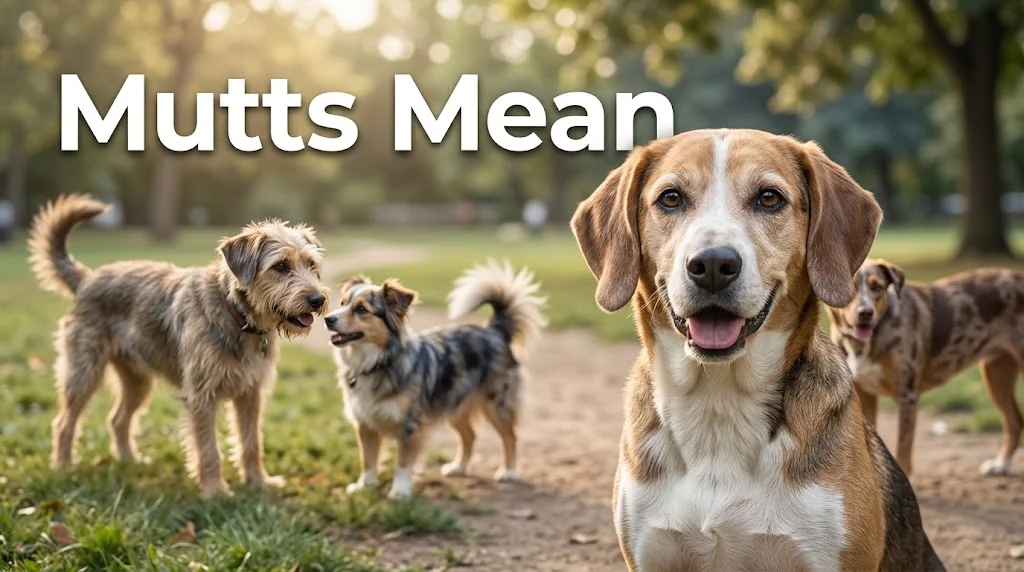
If you see “mutts” in a text message, social-media post, movie, book, or online comment, the meaning usually depends on the context. Most often, mutts simply means mixed-breed dogs. For example, “I love mutts” means “I love mixed-breed dogs.” Dictionaries list mutt as an informal word, especially in North American English, for a dog that is not of one particular breed. The plural is mutts.
There is another meaning. In informal English, mutt can describe a person who behaves in a foolish, silly, careless, or incompetent way. So if a friend jokingly says, “You mutts forgot the tickets,” they may be calling the group silly rather than talking about dogs. The tone and relationship between the speakers matter.
People often search “what does mutts mean in text” because online messages can be short and unclear. They may also confuse mutts with muts, moots, or mutuals, which are different terms.
This 2026 guide explains the meaning, tone, spelling, pronunciation, examples, common mistakes, and real-life uses of mutts so you can understand exactly what someone means.
Definition & Meaning
“Mutts” means mixed-breed dogs in its most common use. It is the plural of “mutt,” an informal word for a dog whose parents are different breeds or whose breed is not known. In informal speech, “mutt” can also describe a foolish or careless person, so context decides the meaning.
Simple definition
Mutts = mixed-breed dogs.
A mutt is a dog that is not a single recognized breed. If someone says:
“We adopted two mutts.”
they mean:
“We adopted two mixed-breed dogs.”
The word is informal. Oxford lists mutt as especially North American and informal, while Cambridge also gives a second informal meaning for a person who behaves in a silly or careless way.
A second meaning
In some conversations, mutt is used for a person who is foolish, silly, or incompetent.
For example:
“You mutts left the door open again.”
Here, mutts does not mean dogs. It is a mild insult or teasing expression aimed at people.
This use can sound playful among friends, but it can also sound rude. Avoid assuming that it is friendly unless the context makes that clear.
Quick meaning table
| Word | Meaning | Typical use | Tone |
|---|---|---|---|
| mutt | One mixed-breed dog | Casual conversation | Informal |
| mutts | More than one mixed-breed dog | Texts, speech, social media | Informal |
| mutt | A foolish or careless person | Informal speech | Teasing or insulting |
| mutts | Foolish or careless people | Casual speech | Informal |
| mongrel | Mixed-breed dog | More common in British English | Informal |
| mixed-breed dog | Dog of mixed ancestry | General communication | Neutral |
| muts | Usually a different slang spelling | Online contexts | Slang |
| moots | Often means mutual online followers | Social media | Internet slang |
| mutuals | People who follow each other online | Social media | Informal |
Pronunciation
Mutt is pronounced approximately /mʌt/.
It rhymes with words such as:
- cut
- hut
- nut
- shut
The plural mutts adds an /s/ sound:
mutt → mutts
What does “mutts” mean in a text message?
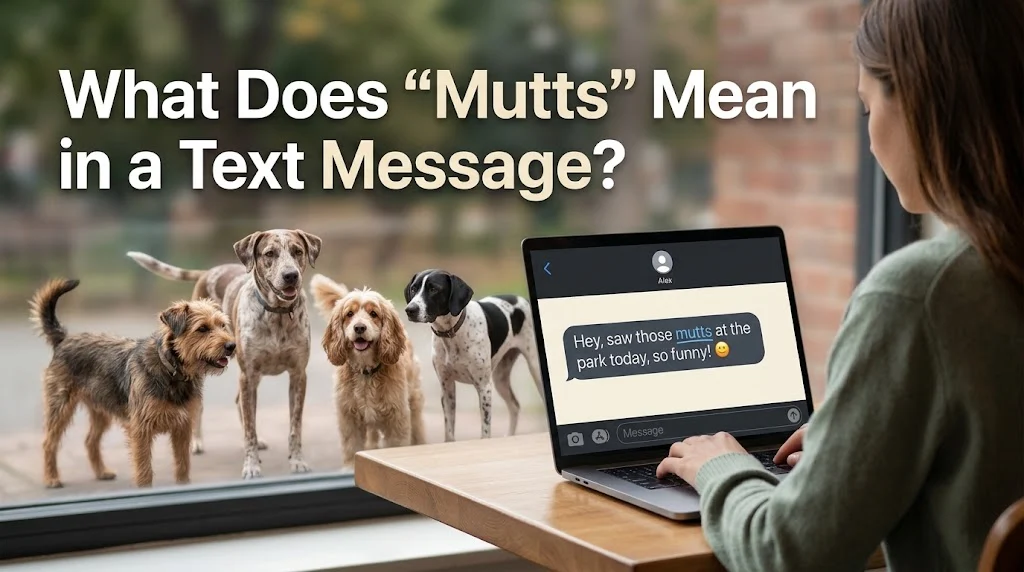
If someone writes:
“Those mutts are adorable.”
they most likely mean mixed-breed dogs.
If they write:
“You mutts are impossible 😂”
they may be jokingly calling their friends silly or foolish.
Look at the words around mutts. If the conversation is about pets, the dog meaning is almost certainly intended. If people are being blamed for doing something silly, the human meaning may be intended.
Why We Use Mutts
People use “mutts” because it is a short, familiar, informal way to describe mixed-breed dogs. It can sound warmer and more natural than saying “mixed-breed dogs” in casual conversation. It is also sometimes used humorously for foolish people, especially among friends. The word is less suitable for formal writing.
1. Everyday usage
Dog owners often use mutt naturally:
“Our mutt loves the beach.”
It sounds casual and friendly.
2. Text messages
Texting often favors short, familiar words.
“I’m walking the mutts.”
This is an easy way to say:
“I’m walking the dogs.”
when the dogs are mixed-breed.
3. Social media
Pet owners may use mutts in captions:
“My two favorite mutts ❤️”
The word can communicate affection without sounding formal.
4. Speaking
In everyday American English, mutt is a normal informal word for a mixed-breed dog. Oxford specifically labels it informal and especially North American.
5. Writing
Writers may choose mutt to make dialogue sound natural.
For example:
“That old mutt followed me home.”
This sounds more conversational than:
“That mixed-breed dog followed me home.”
6. School
A student can use mutt in a creative story or dialogue. In a formal report about animal breeds, however, mixed-breed dog is usually clearer.
7. Professional communication
A workplace email should normally use neutral language:
“The shelter has several mixed-breed dogs available.”
rather than:
“The shelter has several mutts available.”
The latter is not necessarily wrong, but it is casual.
Quick Tip
Mutt is not automatically a negative word. Many people use it affectionately for a beloved mixed-breed dog. Still, if you are writing formally, mixed-breed dog is safer and more precise.
Main Section: 60 Examples of “Mutts” in Text and Conversation
The easiest way to understand “mutts” is to see it in real sentences. The examples below cover pets, texting, social media, family conversations, school, work, humor, storytelling, and the less common use for foolish people. Context changes the tone, so each example explains when the expression works and when another phrase would be better.
Example 1: Talking About Adopted Dogs
Meaning: Mixed-breed dogs.
Real explanation: Someone may call adopted dogs “mutts” when their breeds are mixed or unknown.
Sample sentence: “The shelter had three adorable mutts waiting for homes.”
When to use it: Casual conversations about dogs.
When NOT to use it: Formal veterinary or scientific writing.
Alternatives: mixed-breed dogs; rescue dogs.
Difficulty: Easy
Tone: Informal
Example 2: Describing Your Own Dog
Meaning: A beloved mixed-breed dog.
Sample sentence: “My mutt is half Lab and half something I can’t identify.”
When to use it: Casual conversation.
When NOT to use it: A formal animal record.
Alternatives: mixed-breed dog; crossbreed.
Difficulty: Easy
Tone: Friendly, informal
Example 3: Talking About Several Pets
Meaning: More than one mixed-breed dog.
Sample sentence: “The mutts are sleeping on the couch again.”
When to use it: When everyone knows which dogs you mean.
When NOT to use it: When your audience does not know what “mutts” refers to.
Alternatives: the dogs; the mixed-breed dogs.
Difficulty: Easy
Tone: Informal
Example 4: A Funny Pet Caption
Meaning: Playful name for dogs.
Sample sentence: “Sunday naps with my favorite mutts.”
When to use it: Instagram, Facebook, texts, or casual captions.
When NOT to use it: Formal business posts.
Alternatives: pups; dogs.
Difficulty: Easy
Tone: Warm, informal
Example 5: Talking About Rescue Dogs
Meaning: Mixed-breed rescue dogs.
Sample sentence: “These two mutts were rescued from the shelter last year.”
When to use it: Casual pet discussions.
When NOT to use it: When you specifically need to emphasize that the dogs are rescue animals rather than mixed-breed.
Alternatives: rescue dogs; mixed-breed dogs.
Difficulty: Easy
Tone: Neutral/informal
Example 6: Unknown Breed
Meaning: A dog whose exact breed is unclear.
Sample sentence: “Nobody knows what breeds are in that mutt.”
When to use it: Casual discussion.
When NOT to use it: Scientific genetic descriptions.
Alternatives: mixed-breed dog; dog of unknown ancestry.
Difficulty: Easy
Tone: Informal
Example 7: Comparing Dogs
Meaning: Mixed-breed dogs compared with purebred dogs.
Sample sentence: “I’ve had both purebreds and mutts, and I love them equally.”
When to use it: Personal conversation.
When NOT to use it: Formal breed research without defining the term.
Alternatives: mixed-breed dogs; crossbreeds.
Difficulty: Easy
Tone: Neutral/informal
Example 8: Talking About Adoption
Meaning: Mixed-breed dogs available for adoption.
Sample sentence: “The shelter has lots of sweet mutts.”
When to use it: Casual animal-rescue conversations.
When NOT to use it: A formal shelter report.
Alternatives: mixed-breed dogs; adoptable dogs.
Difficulty: Easy
Tone: Friendly
Example 9: A Dog-Lover’s Text
Meaning: Affectionate reference to dogs.
Sample sentence: “Send me pictures of the mutts!”
When to use it: With someone who owns dogs.
When NOT to use it: If the owner dislikes the word.
Alternatives: pups; dogs.
Difficulty: Easy
Tone: Playful
Example 10: Family Conversation
Meaning: The family’s dogs.
Sample sentence: “Did you feed the mutts?”
When to use it: Informal family talk.
When NOT to use it: Formal communication.
Alternatives: dogs; puppies.
Difficulty: Easy
Tone: Casual
Example 11: Talking About Messy Dogs
Meaning: Dogs, with a humorous focus on their behavior.
Sample sentence: “The mutts tracked mud all over the kitchen.”
When to use it: Casual storytelling.
When NOT to use it: A complaint where a neutral tone is needed.
Alternatives: dogs; muddy dogs.
Difficulty: Easy
Tone: Humorous
Example 12: Talking About Old Dogs
Meaning: Informal term for older mixed-breed dogs.
Sample sentence: “Those old mutts still run faster than I do.”
When to use it: Friendly conversation.
When NOT to use it: If “old” is being used sensitively in a formal context.
Alternatives: older dogs; senior dogs.
Difficulty: Easy
Tone: Affectionate
Example 13: A Movie Dialogue
Meaning: Natural spoken reference to a dog.
Sample sentence: “That mutt followed us all the way home.”
When to use it: Dialogue or storytelling.
When NOT to use it: Scientific writing.
Alternatives: dog; stray dog.
Difficulty: Easy
Tone: Informal
Example 14: A Novel
Meaning: A character’s casual word for a mixed-breed dog.
Sample sentence: “The mutt curled up beside the fire.”
When to use it: Fiction.
When NOT to use it: A formal technical description.
Alternatives: dog; mixed-breed dog.
Difficulty: Easy
Tone: Literary/informal
Example 15: A Children’s Story
Meaning: A friendly dog character.
Sample sentence: “The little mutt wagged his tail and followed Mia.”
When to use it: Informal storytelling.
When NOT to use it: Formal academic writing.
Alternatives: puppy; dog.
Difficulty: Easy
Tone: Friendly
Example 16: Talking About a Stray
Meaning: A mixed-breed dog found without an owner.
Sample sentence: “A scruffy mutt was waiting outside the store.”
When to use it: Casual description.
When NOT to use it: If breed status is unknown and precision matters.
Alternatives: stray dog; unidentified dog.
Difficulty: Easy
Tone: Informal
Example 17: A Dog With Many Features
Meaning: A dog with traits from several breeds.
Sample sentence: “That mutt has the ears of a shepherd and the legs of a terrier.”
When to use it: Casual observation.
When NOT to use it: Professional breed identification.
Alternatives: mixed-breed dog; crossbreed.
Difficulty: Medium
Tone: Informal
Example 18: A Funny Dog Story
Meaning: Humorous reference to a dog.
Sample sentence: “Our mutt stole a sandwich and looked proud of himself.”
When to use it: Stories, texts, social posts.
When NOT to use it: Formal incident reports.
Alternatives: dog; little thief.
Difficulty: Easy
Tone: Playful
Example 19: Pet-Sitting
Meaning: Dogs being cared for.
Sample sentence: “I’m watching the mutts while Sam is away.”
When to use it: Casual speech.
When NOT to use it: A professional pet-care agreement.
Alternatives: dogs; pets.
Difficulty: Easy
Tone: Informal
Example 20: Talking About a Dog’s Personality
Meaning: Affectionate nickname.
Sample sentence: “The mutt is nervous around strangers but loves children.”
When to use it: Casual pet discussion.
When NOT to use it: Formal behavioral records.
Alternatives: dog; mixed-breed dog.
Difficulty: Easy
Tone: Warm
Example 21: “You Mutts!”
Meaning: A playful or mildly insulting way to address several people.
Sample sentence: “You mutts forgot to lock the door again!”
When to use it: Among friends or in humorous dialogue.
When NOT to use it: Professional settings or with strangers.
Alternatives: you guys; you fools.
Difficulty: Medium
Tone: Playful or insulting
Example 22: “Those Mutts”
Meaning: Foolish people, or dogs, depending on context.
Sample sentence: “Those mutts broke the printer again.”
When to use it: Casual speech when the people know the tone is joking.
When NOT to use it: Workplace complaints.
Alternatives: those guys; those fools.
Difficulty: Medium
Tone: Informal
Example 23: “Come On, Mutts!”
Meaning: A humorous command to a group of people.
Sample sentence: “Come on, mutts! We’re going to miss the bus.”
When to use it: Friendly teasing.
When NOT to use it: Formal communication.
Alternatives: come on, guys; hurry up.
Difficulty: Medium
Tone: Playful
Example 24: Calling Friends Mutts
Meaning: Friendly teasing.
Sample sentence: “Love you mutts. See you tomorrow.”
When to use it: Very casual friendships.
When NOT to use it: With people who may take insults seriously.
Alternatives: guys; idiots; fools.
Difficulty: Medium
Tone: Playful
Example 25: A Sports Team
Meaning: Humorous insult aimed at teammates.
Sample sentence: “You mutts better show up early for practice.”
When to use it: Friendly team banter.
When NOT to use it: Official coaching messages.
Alternatives: team; guys.
Difficulty: Medium
Tone: Informal
Example 26: A Gaming Chat
Meaning: Playful insult toward teammates.
Sample sentence: “You mutts left me alone in the final round!”
When to use it: Among friends who joke this way.
When NOT to use it: With strangers or new teammates.
Alternatives: guys; clowns.
Difficulty: Medium
Tone: Playful
Example 27: A Group Text
Meaning: Teasing a group of friends.
Sample sentence: “You mutts still coming over tonight?”
When to use it: Casual group chats.
When NOT to use it: Work group chats.
Alternatives: everyone; guys.
Difficulty: Easy
Tone: Informal
Example 28: A Brother or Sister
Meaning: Playful insult between siblings.
Sample sentence: “You mutts ate all the pizza!”
When to use it: Family joking.
When NOT to use it: Serious disagreements.
Alternatives: you guys; you monsters.
Difficulty: Easy
Tone: Humorous
Example 29: A Teacher in Fiction
Meaning: A teacher joking with students.
Sample sentence: “All right, you mutts, settle down.”
When to use it: Fictional dialogue or a very informal setting.
When NOT to use it: Real professional communication unless the relationship clearly supports it.
Alternatives: everyone; class.
Difficulty: Medium
Tone: Playful
Example 30: A Movie Character
Meaning: A rough, humorous way of addressing people.
Sample sentence: “You mutts better stay behind me.”
When to use it: Fiction, movies, dramatic dialogue.
When NOT to use it: Formal writing.
Alternatives: you guys; fools.
Difficulty: Medium
Tone: Rough/informal
Example 31: A Parent Teasing Children
Meaning: Light teasing.
Sample sentence: “You little mutts left your shoes in the hallway.”
When to use it: Family humor.
When NOT to use it: When a child may interpret it as serious criticism.
Alternatives: kids; little rascals.
Difficulty: Medium
Tone: Playful
Example 32: A Friend Made a Silly Mistake
Meaning: Calling someone foolish in a joking way.
Sample sentence: “You mutt, you put the milk in the cupboard.”
When to use it: Close friendships.
When NOT to use it: With strangers.
Alternatives: silly goose; fool.
Difficulty: Medium
Tone: Teasing
Example 33: A Mild Insult
Meaning: Foolish or incompetent person.
Sample sentence: “That mutt forgot his own password.”
When to use it: Informal speech.
When NOT to use it: Professional or respectful communication.
Alternatives: fool; idiot.
Difficulty: Medium
Tone: Negative/informal
Example 34: Talking About Someone Careless
Meaning: A careless person.
Sample sentence: “Only a mutt would leave the keys in the door.”
When to use it: Informal joking.
When NOT to use it: Serious criticism.
Alternatives: careless person; fool.
Difficulty: Medium
Tone: Informal
Example 35: Self-Deprecating Humor
Meaning: Calling yourself foolish.
Sample sentence: “I’m such a mutt—I forgot my own appointment.”
When to use it: Casual conversation.
When NOT to use it: Formal self-description.
Alternatives: fool; idiot.
Difficulty: Medium
Tone: Humorous
Example 36: A Friend’s Mistake
Meaning: Mild teasing.
Sample sentence: “You mutt, you sent the email to the wrong person.”
When to use it: Close friends.
When NOT to use it: Professional criticism.
Alternatives: you goof; you fool.
Difficulty: Medium
Tone: Playful
Example 37: A Sports Mistake
Meaning: A foolish mistake by a player.
Sample sentence: “He felt like a mutt after missing the easy shot.”
When to use it: Casual sports talk.
When NOT to use it: Respectful sports reporting.
Alternatives: fool; frustrated player.
Difficulty: Medium
Tone: Informal
Example 38: A Fictional Villain’s Insult
Meaning: Calling someone foolish or inferior.
Sample sentence: “Get out of my way, you mutt.”
When to use it: Fictional dialogue.
When NOT to use it: Everyday professional speech.
Alternatives: fool; idiot.
Difficulty: Medium
Tone: Hostile
Example 39: An Argument
Meaning: A negative insult.
Sample sentence: “Stop acting like a mutt and listen.”
When to use it: Only when intentionally using rough informal language.
When NOT to use it: Respectful disagreement.
Alternatives: stop being careless; please listen.
Difficulty: Medium
Tone: Negative
Example 40: Friendly Roasting
Meaning: A joking insult between close friends.
Sample sentence: “You mutts couldn’t organize a two-person picnic.”
When to use it: Friendly banter.
When NOT to use it: Workplace or unfamiliar groups.
Alternatives: you clowns; you guys.
Difficulty: Medium
Tone: Humorous
Example 41: Texting About a Dog
Meaning: Mixed-breed dogs.
Sample sentence: “The mutts are at the vet.”
When to use it: Casual text messages.
When NOT to use it: Formal veterinary communication.
Alternatives: dogs; mixed-breed dogs.
Difficulty: Easy
Tone: Neutral
Example 42: Texting About Friends
Meaning: Foolish or silly friends.
Sample sentence: “The mutts are already at the bar 😂”
When to use it: Friendly group chats.
When NOT to use it: Professional messages.
Alternatives: guys; friends.
Difficulty: Medium
Tone: Playful
Example 43: Instagram Caption
Meaning: Affectionate dogs.
Sample sentence: “Weekend adventures with these mutts.”
When to use it: Social media.
When NOT to use it: Formal posts.
Alternatives: pups; dogs.
Difficulty: Easy
Tone: Friendly
Example 44: Facebook Post
Meaning: Family dogs.
Sample sentence: “The mutts finally learned to sit still for a photo.”
When to use it: Personal posts.
When NOT to use it: Official animal-care information.
Alternatives: dogs; pups.
Difficulty: Easy
Tone: Casual
Example 45: X Post
Meaning: Could refer to dogs or people.
Sample sentence: “These mutts stole my blanket again.”
When to use it: A humorous post about pets.
When NOT to use it: If readers may not know what the word refers to.
Alternatives: dogs; little troublemakers.
Difficulty: Easy
Tone: Humorous
Example 46: Dating Conversation
Meaning: Usually a playful reference to dogs or friends.
Sample sentence: “My mutts are going to judge you when you meet them.”
When to use it: Casual dating conversation.
When NOT to use it: Very formal communication.
Alternatives: dogs; pups.
Difficulty: Easy
Tone: Playful
Example 47: Talking About a Partner’s Dogs
Meaning: Affectionate reference to mixed-breed dogs.
Sample sentence: “Your mutts are adorable.”
When to use it: Friendly personal conversation.
When NOT to use it: If the owner dislikes the word.
Alternatives: dogs; pups.
Difficulty: Easy
Tone: Warm
Example 48: Phone Call
Meaning: Informal dog reference.
Sample sentence: “I can’t stay long. I have to feed the mutts.”
When to use it: Casual phone conversations.
When NOT to use it: Formal calls.
Alternatives: dogs; pets.
Difficulty: Easy
Tone: Informal
Example 49: School Story
Meaning: Mixed-breed dogs in a narrative.
Sample sentence: “Two mutts followed the boy down the road.”
When to use it: Creative writing.
When NOT to use it: Scientific reports.
Alternatives: dogs; mixed-breed dogs.
Difficulty: Easy
Tone: Narrative
Example 50: Poetry
Meaning: A compact, vivid word for dogs.
Sample sentence: “Three mutts slept beneath the old porch.”
When to use it: Poetry and creative writing.
When NOT to use it: Technical writing.
Alternatives: dogs; strays.
Difficulty: Medium
Tone: Literary
Example 51: Email to a Friend
Meaning: Casual reference to pets.
Sample sentence: “The mutts say hello!”
When to use it: Personal email.
When NOT to use it: Business email.
Alternatives: dogs; pups.
Difficulty: Easy
Tone: Friendly
Example 52: Professional Animal Writing
Meaning: Informal term that may be replaced by a precise term.
Sample sentence: “The shelter cares for 20 mixed-breed dogs.”
When to use it: Professional writing.
When NOT to use it: If you want a playful voice.
Alternatives: mixed-breed dogs; crossbreed dogs.
Difficulty: Medium
Tone: Formal/neutral
Example 53: News Writing
Meaning: Usually replaced with a more precise description.
Sample sentence: “The shelter is seeking homes for several mixed-breed dogs.”
When to use it: Straight news or official reporting.
When NOT to use it: A deliberately conversational feature.
Alternatives: mixed-breed dogs; rescue dogs.
Difficulty: Medium
Tone: Neutral
Example 54: Formal Essay
Meaning: Informal word for a mixed-breed dog.
Sample sentence: “The study examined health outcomes among mixed-breed dogs.”
When to use it: Academic writing.
When NOT to use it: If discussing dialogue or informal language itself.
Alternatives: mixed-breed dogs; crossbred dogs.
Difficulty: Medium
Tone: Formal
Example 55: Learning American English
Meaning: Informal North American term for a mixed-breed dog.
Sample sentence: “My neighbor has a friendly mutt.”
When to use it: Learning everyday American English.
When NOT to use it: Formal academic English.
Alternatives: mixed-breed dog; mongrel.
Difficulty: Medium
Tone: Informal
Example 56: British English Comparison
Meaning: A mixed-breed dog.
Sample sentence: “They adopted a mutt from the shelter.”
When to use it: American/North American-style informal English.
When NOT to use it: When you specifically want traditional British vocabulary.
Alternatives: mongrel; mixed-breed dog.
Difficulty: Medium
Tone: Informal
Oxford identifies mutt as especially North American and informal, while mongrel is commonly associated with British English.
Example 57: “Our Mutts”
Meaning: The speaker’s dogs.
Sample sentence: “Our mutts love going to the lake.”
When to use it: Personal conversations and captions.
When NOT to use it: Formal documents.
Alternatives: our dogs; our mixed-breed dogs.
Difficulty: Easy
Tone: Friendly
Example 58: “The Old Mutts”
Meaning: Older dogs, usually with affection.
Sample sentence: “The old mutts still enjoy their morning walk.”
When to use it: Informal storytelling.
When NOT to use it: Sensitive professional contexts.
Alternatives: senior dogs; older dogs.
Difficulty: Easy
Tone: Affectionate
Example 59: “Those Poor Mutts”
Meaning: Dogs being described sympathetically.
Sample sentence: “Those poor mutts were outside in the rain.”
When to use it: Casual speech or storytelling.
When NOT to use it: Formal animal-welfare documentation.
Alternatives: poor dogs; unfortunate dogs.
Difficulty: Easy
Tone: Sympathetic
Example 60: “You Mutts!”
Meaning: A group of people being called foolish or silly.
Sample sentence: “You mutts left the tickets at home!”
When to use it: Close friends, comedy, fictional dialogue, or playful banter.
When NOT to use it: Business communication, school assignments, or conversations with strangers.
Alternatives: you fools; you guys; you idiots.
Difficulty: Medium
Tone: Informal, teasing, or insulting
Quick Reference Table
“Mutts” is flexible because the same spelling can refer to dogs or people. The quickest way to identify the meaning is to examine the surrounding words. Pet words such as “feed,” “walk,” “adopt,” and “shelter” usually signal the dog meaning. Words about mistakes, behavior, or group teasing can signal the informal human meaning.
| # | Example | Meaning | Best setting | Tone |
|---|---|---|---|---|
| 1 | Adopted mutts | Mixed-breed dogs | Conversation | Informal |
| 2 | My mutt | One mixed-breed dog | Conversation | Friendly |
| 3 | The mutts | Several dogs | Conversation | Informal |
| 4 | Favorite mutts | Beloved dogs | Social media | Warm |
| 5 | Rescue mutts | Mixed-breed rescue dogs | Casual | Friendly |
| 6 | Unknown breed mutt | Breed is unclear | Conversation | Informal |
| 7 | Purebreds and mutts | Mixed vs. purebred | Conversation | Neutral |
| 8 | Shelter mutts | Mixed-breed shelter dogs | Casual | Friendly |
| 9 | Send dog pictures | Affectionate dog term | Text | Playful |
| 10 | Feed the mutts | Dogs | Family | Casual |
| 11 | Muddy mutts | Messy dogs | Storytelling | Humorous |
| 12 | Old mutts | Older dogs | Conversation | Affectionate |
| 13 | That mutt followed us | Dog | Story | Informal |
| 14 | Mutt by the fire | Dog | Fiction | Literary |
| 15 | Little mutt | Dog | Children’s story | Friendly |
| 16 | Scruffy mutt | Dog | Casual | Informal |
| 17 | Mixed features | Mixed-breed dog | Conversation | Informal |
| 18 | Sandwich-stealing mutt | Mischievous dog | Story | Humorous |
| 19 | Watching the mutts | Caring for dogs | Conversation | Informal |
| 20 | Nervous mutt | Dog | Conversation | Warm |
| 21 | You mutts! | Foolish people | Friends | Playful |
| 22 | Those mutts | People or dogs | Casual | Informal |
| 23 | Come on, mutts! | People | Friends | Playful |
| 24 | Love you mutts | Friends | Text | Playful |
| 25 | Team mutts | Teammates | Sports | Informal |
| 26 | Gaming mutts | Teammates | Gaming | Playful |
| 27 | Group-chat mutts | Friends | Text | Casual |
| 28 | Sibling mutts | Siblings | Family | Humorous |
| 29 | Teacher dialogue | Students | Fiction | Playful |
| 30 | Movie insult | People | Fiction | Rough |
| 31 | Little mutts | Children | Family | Teasing |
| 32 | Silly mistake | Person | Friends | Teasing |
| 33 | Mild insult | Foolish person | Informal | Negative |
| 34 | Careless person | Foolish person | Casual | Negative |
| 35 | Self-deprecation | Yourself | Conversation | Humorous |
| 36 | Friend’s mistake | Foolish friend | Friends | Playful |
| 37 | Sports mistake | Foolish player | Casual | Informal |
| 38 | Villain’s insult | Person | Fiction | Hostile |
| 39 | Argument | Foolish person | Conflict | Negative |
| 40 | Friendly roasting | Friends | Banter | Humorous |
| 41 | Dogs at vet | Dogs | Text | Informal |
| 42 | Friends at bar | Friends | Text | Playful |
| 43 | Instagram dogs | Dogs | Social | Friendly |
| 44 | Facebook dogs | Dogs | Social | Casual |
| 45 | Funny post | Dogs or people | X/social media | Humorous |
| 46 | Dating dogs | Dogs | Dating chat | Playful |
| 47 | Partner’s dogs | Dogs | Conversation | Warm |
| 48 | Phone call | Dogs | Casual call | Informal |
| 49 | School story | Dogs | Creative writing | Narrative |
| 50 | Poetry | Dogs | Poetry | Literary |
| 51 | Personal email | Dogs | Friendly | |
| 52 | Animal report | Mixed-breed dogs | Professional | Neutral |
| 53 | News article | Mixed-breed dogs | Journalism | Neutral |
| 54 | Formal essay | Mixed-breed dogs | Academic | Formal |
| 55 | American English | Mixed-breed dog | Language learning | Informal |
| 56 | British comparison | Mixed-breed dog | Language learning | Informal |
| 57 | Our mutts | Dogs | Conversation | Friendly |
| 58 | Old mutts | Older dogs | Conversation | Affectionate |
| 59 | Poor mutts | Dogs | Storytelling | Sympathetic |
| 60 | You mutts! | Foolish people | Banter | Teasing |
Real-Life Conversations
In real conversations, “mutts” is understood from context more than from the word itself. These examples show the difference between the dog meaning and the human meaning. Notice how the surrounding words—such as “feed,” “walk,” “shelter,” “forgot,” or “hurry”—help identify what the speaker means.
Conversation 1: Friends Talking About Dogs
Maya: Are you bringing the dogs tomorrow?
Chris: Of course. The mutts love the park.
Maya: Even Max?
Chris: Especially Max. He thinks every squirrel is his personal enemy.
Maya: Fair enough. Bring some water for the mutts.
Meaning: Here, mutts clearly means mixed-breed dogs. Words such as “dogs,” “park,” “squirrel,” and “water” make the meaning obvious.
Conversation 2: Family
Mom: Has anyone fed the dogs?
Jake: Not yet.
Mom: Well, somebody better feed those mutts before they start barking at me.
Jake: I’ll do it.
Meaning: Mutts means the family’s dogs. The word sounds humorous rather than genuinely insulting.
Conversation 3: Friends Teasing Each Other
Alex: Who left the front door open?
Sam: Not me.
Jordan: It was Alex.
Alex: Wait, seriously?
Sam: You mutt. You were the last one out.
Alex: Oh. Right.
Meaning: Here, mutt describes a foolish or careless person. It is teasing, not a reference to a dog.
Conversation 4: Dating
Nina: I should warn you about something.
Mark: What?
Nina: My two mutts will probably attack you with kisses when you come over.
Mark: Honestly, that sounds like a good first date.
Nina: They’re very friendly.
Meaning: Mutts means dogs. The affectionate context makes that clear.
Conversation 5: Group Chat
Liam: Who has the tickets?
Ella: I thought Ben had them.
Ben: Wait…
Liam: Ben.
Ben: I left them on my desk.
Ella: You mutts 😂
Meaning: Mutts refers jokingly to the people in the group. The laughing emoji also signals playful teasing.
Everyday Usage
“Mutts” appears most naturally in casual speech, personal writing, social media, stories, and dialogue. It is less suitable for formal reports because “mixed-breed dogs” is more precise. When the word describes people, it becomes even more informal and can sound insulting, so writers should use it only when the tone or context supports it.
Conversation
In everyday conversation, mutt is simple and natural:
“What kind of dog is he?”
“He’s a mutt.”
This is often enough. You do not need to explain the word unless the listener is learning English.
Text messages
Texting is one of the easiest places to see mutts:
“Can you feed the mutts?”
“The mutts are exhausted.”
“I miss my mutts.”
The meaning is usually obvious because people are talking about pets.
Books
Authors use mutt when they want dialogue to sound natural.
A character might say:
“That mutt has been following me all morning.”
This can tell the reader something about the character’s personality. A rough character may use mutt instead of dog because the word feels more colorful.
Movies and TV
The word can appear in dialogue, especially in comedy, crime stories, family stories, or older-style American dialogue.
When used for a person, it can create a rough or joking voice:
“You mutts better get moving.”
The meaning is not necessarily extremely offensive, but the tone is definitely informal.
Poetry
Mutt can be useful in poetry because it is short and vivid.
Compare:
“The mixed-breed dogs slept beneath the porch.”
with:
“Three mutts slept beneath the porch.”
The second version is shorter and more conversational.
Emails
Use mutts freely in a personal email if the recipient knows your dogs:
“The mutts are doing great.”
Avoid it in formal business writing.
Text messages
For personal texts, it is completely natural:
“The mutts need a walk.”
Pet accounts may use mutts in captions:
“Rainy-day cuddles with the mutts.”
A family post might say:
“Our mutts turned the garden into a disaster again.”
X
A short post might use the word humorously:
“My mutts have decided the clean laundry belongs to them.”
LinkedIn is generally not the natural setting for mutts, unless the post is personal or intentionally humorous.
Instead of:
“Our office mutts missed another deadline.”
a professional writer should say:
“Our team missed another deadline.”
School assignments
The word is appropriate when:
- analyzing informal English
- writing dialogue
- writing fiction
- discussing vocabulary
- studying American English
It is less suitable in a formal essay about animals unless the essay is specifically discussing the word.
Quick Takeaway
Use “mutts” when you want casual, natural English. Use “mixed-breed dogs” when you want clear, neutral, or professional English.
Writing Tips
The safest writing choice depends on your audience. “Mutts” is informal and works well in conversation, personal posts, dialogue, and creative writing. “Mixed-breed dogs” is clearer for professional, academic, veterinary, and scientific writing. When “mutt” describes a person, use extra care because the word can sound insulting.
Best situations for “mutts”
Use it in:
- casual conversation
- text messages
- personal blogs
- social media
- friendly emails
- fiction
- dialogue
- humorous writing
Formal vs. informal
| Informal | More neutral |
|---|---|
| mutt | mixed-breed dog |
| mutts | mixed-breed dogs |
| old mutt | older mixed-breed dog |
| scruffy mutt | scruffy mixed-breed dog |
| you mutts | you people / everyone |
Speaking vs. writing
Speaking: Very natural in casual conversation.
Personal writing: Usually fine.
Academic writing: Usually replace it with mixed-breed dog.
Professional writing: Prefer the neutral term.
Creative writing: Use it when it fits the character or narrator.
British vs. American usage
Mutt is especially associated with North American English and is informal. Oxford gives “mongrel” as a synonym and separately identifies mongrel as especially British English.
That does not mean British speakers never understand mutt. They generally can. It simply means mongrel may sound more traditionally British.
Children vs. adults
Children may hear mutt in cartoons, books, family talk, or movies.
When teaching children English, explain:
“A mutt is an informal word for a mixed-breed dog.”
Also explain that mutt can sometimes be used as an insult for a person.
Professional communication
For a shelter website, veterinary report, scientific paper, or business document, use:
mixed-breed dog
instead of:
mutt
This gives the reader a more precise and professional description.
Creative writing
Creative writers have more freedom.
If a character says:
“That mutt stole my sandwich.”
the word helps create personality and voice.
Pro Tip: Do not replace every informal word with a formal one. Good dialogue should sound like real speech.
Common Mistakes
Most mistakes with “mutts” come from spelling, context, or tone. The biggest spelling issue is confusing “mutts” with “muts” or “moots.” Another common mistake is assuming “mutt” is always an insult. For dogs, many people use the word affectionately; for people, it is much more likely to sound teasing or insulting.
| Mistake | Reason | Correct version | Practical explanation |
|---|---|---|---|
| “My muts are dogs.” | Missing second “t” | “My mutts are dogs.” | Mutts is the plural of mutt. |
| “Moots means mixed-breed dogs.” | Confuses online slang | “Mutts means mixed-breed dogs.” | Moots can be social-media slang. |
| “Mutt is always insulting.” | Ignores context | “Mutt can be affectionate or negative.” | Tone changes the meaning. |
| “Mutts” for one dog | Wrong number | “Mutt” | Singular = mutt. |
| “Mutt dogs” in formal writing | Informal wording | “Mixed-breed dogs” | More precise. |
| “You mutts” to a boss | Too informal | “Everyone” | The expression can sound insulting. |
| “Mutt” means purebred | Opposite meaning | “Mutt” means mixed-breed | A mutt is not a single recognized breed. |
| “Mutt” is formal English | Wrong register | “Mutt” is informal | Dictionaries label it informal. |
| “All mutts are stray dogs.” | Confuses breed with ownership | “A mutt can have a loving home.” | Mixed breed does not mean homeless. |
| “Mutt” and “mongrel” always feel identical | Register differs | Check context | “Mutt” is especially North American; “mongrel” is often associated with British English. |
FAQs
What does “mutts” mean in text?
“Mutts” usually means mixed-breed dogs. It is the plural form of mutt, an informal word for a dog that is not one particular breed. In some casual conversations, “mutts” can also refer jokingly or insultingly to foolish people. The surrounding words usually make the intended meaning clear.
Is “mutt” a bad word?
Not always. Mutt is an informal word, but it is not automatically offensive when talking about dogs. Many dog owners use it affectionately for their mixed-breed pets. When used for a person, however, mutt can be a mild insult meaning someone foolish or careless. Tone, context, and the relationship between speakers matter.
What is the difference between “mutt” and “mongrel”?
Both can describe a mixed-breed dog. Mutt is especially associated with informal North American English, while mongrel is commonly associated with British English. “Mutt” often sounds casual and can be affectionate, especially among dog owners. “Mongrel” can sound more negative in some contexts, so the words are not always equal in tone.
What does “you mutts” mean?
“You mutts” is usually an informal way to call several people foolish, silly, or careless. Friends may use it as playful teasing: “You mutts forgot the tickets!” It can also sound rude if used with strangers, customers, coworkers, teachers, or other people in a formal setting.
What does “my mutts” mean?
“My mutts” usually means “my mixed-breed dogs.” It is a casual and often affectionate expression. For example, “My mutts are sleeping on the couch” means the speaker’s dogs are sleeping there. The phrase is common in personal conversation, texts, social-media captions, and informal writing.
Is “mutts” formal English?
No. “Mutts” is informal English. If you are writing a school report, academic paper, veterinary document, professional article, or formal business communication, mixed-breed dogs is usually the better choice. In creative writing and natural dialogue, however, “mutts” can be useful because it sounds conversational.
Is “mutts” the same as “muts”?
No. “Mutts” and “muts” are different spellings. Mutts is the plural of mutt and usually refers to mixed-breed dogs. If you saw “muts” online, the writer may have intended a slang abbreviation, so you need to look at the surrounding conversation. Do not automatically assume the two words mean the same thing.
Is “moots” the same as “mutts”?
No. “Moots” is a different word. In online communities, especially social-media contexts, moots can be shorthand for mutual followers or mutual online connections. Mutts, by contrast, is the plural of mutt, normally meaning mixed-breed dogs. Spelling is important here.
Can I use “mutts” in a school assignment?
You can use it when the assignment is about informal English, dialogue, fiction, vocabulary, or social language. For a formal essay about dogs, use mixed-breed dogs instead. If you use “mutt” in dialogue, it can make your character sound natural and conversational.
What is the pronunciation of “mutts”?
Mutt is pronounced /mʌt/, with a vowel sound similar to the one in cut or hut. Mutts is the plural and adds an /s/ sound. The word is short and easy to say once you know the vowel sound.
Related Terms
Several words look or sound similar to “mutts,” but they should not be treated as synonyms. “Mutt,” “mongrel,” and “mixed-breed dog” are related because they can describe dogs of mixed ancestry. “Muts” and “moots” are different spellings and may belong to online slang. Checking the exact spelling can prevent a major misunderstanding.
| Term | Meaning | Example | Tone |
|---|---|---|---|
| mutt | Mixed-breed dog | “He has a mutt.” | Informal |
| mutts | More than one mutt | “The mutts are sleeping.” | Informal |
| mixed-breed dog | Dog of mixed ancestry | “She adopted a mixed-breed dog.” | Neutral |
| mongrel | Mixed-breed dog | “They found a mongrel.” | Informal |
| crossbreed | Animal bred from different breeds | “The dog is a crossbreed.” | Neutral |
| purebred | Dog belonging to a recognized breed | “She owns a purebred dog.” | Neutral |
| muts | Possible internet abbreviation/slang | Depends on context | Slang |
| moots | Often mutual online followers | “My moots are funny.” | Internet slang |
| mutuals | People who follow each other online | “I met some mutuals.” | Informal |
| mongrel dog | Mixed-breed dog | “The mongrel dog was adopted.” | Informal |
| stray dog | Dog without an owner or currently roaming | “A stray dog was outside.” | Neutral |
| rescue dog | Dog obtained through rescue/adoption | “She adopted a rescue dog.” | Neutral |
Mutt vs. mixed-breed dog
These can refer to the same type of dog, but mutt is more casual.
“My mutt is friendly.”
sounds conversational.
“My mixed-breed dog is friendly.”
sounds more neutral.
Mutt vs. stray
These words describe different things.
A mutt refers to breed or mixed ancestry.
A stray refers to a dog that is lost, roaming, or without an apparent owner.
A dog can be:
- a mutt but not a stray
- a stray but not necessarily a mutt
- both a mutt and a stray
Mutt vs. purebred
These terms contrast with each other in ordinary usage.
A purebred dog belongs to a particular recognized breed.
A mutt is generally a mixed-breed dog.
Mutt vs. rescue dog
These are not opposites.
A rescue dog can be a mutt.
A rescue dog can also be purebred.
Rescue describes how the dog was obtained or its history, while mutt describes its breed status.
Final Thoughts
“Mutts” most often means mixed-breed dogs. It is the plural of mutt, an informal word used especially in North American English. The word can sound warm and affectionate when people talk about their pets. But context matters. Mutt can also describe a foolish or careless person, and “you mutts” can be a joking or insulting way to address a group. That meaning is much more informal.
If you need a neutral or professional term, use mixed-breed dog. If you are chatting with friends, writing dialogue, posting about your pets, or telling a casual story, mutt and mutts can sound completely natural. And remember the spelling: mutts, muts, and moots are not automatically the same thing. When you see one in a text, read the surrounding words before deciding what the sender means.
Discover more post
What Does Q Mean in Text 2026
What Does RWAL Mean in Text? 2026
What Does FWT Mean in Text? 2026

Ella Brooks ek professional content writer, English language educator, aur SEO specialist hain, jo literary devices, metaphors, similes, idioms, aur easy English learning par kaam karti hain. Unka main focus simple, practical aur human-friendly content likhna hai jo students, teachers, bloggers aur beginners ke liye asaan ho.