Have you ever received a text that says “lk this song” or “I lk it” and wondered what LK means? You are not alone. Short text messages often use slang and abbreviations that can be hard to understand, especially when someone leaves out letters to type faster.
In texting, LK often means “like.” People may use it in casual chats, social media comments, and direct messages. For example, “I lk your outfit” may mean “I like your outfit.” Still, the meaning is not always clear from the letters alone. Some people use LK as a personal shorthand, a name, or an abbreviation with a different meaning.
Context is the key. The words before and after LK can help you work out what the sender means. The same letters may also mean something different in a gaming chat, a work message, or a conversation with a close friend. By the end, you should be able to understand LK more confidently and decide when it makes sense to use it yourself.
Definition & Meaning
LK usually means “like” in informal texting when a person uses it as a shortened spelling of the word. For example, “I lk that movie” can mean “I like that movie.” However, LK is not a universal abbreviation, so you should read the full message before deciding what it means.
What is the simple meaning of LK?
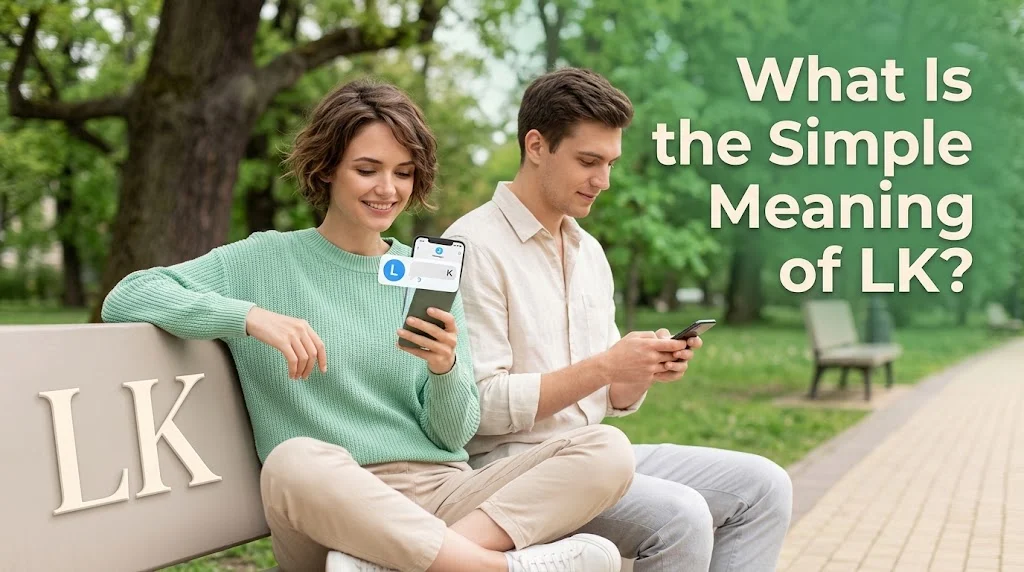
LK is a short form that some people use for like. It can express a preference, approval, or interest.
Here are three simple examples:
- “I lk your shoes.” = “I like your shoes.”
- “Do u lk pizza?” = “Do you like pizza?”
- “I lk this song.” = “I like this song.”
The spelling is informal. Many people prefer to type the full word “like,” even in quick messages.
Quick explanation
Imagine that a friend sends you this message:
“lk ur new haircut”
The friend probably means “Like your new haircut” or “I like your new haircut.” The exact meaning depends on the conversation. In a natural English sentence, the full word is clearer.
Quick tip: If replacing LK with “like” makes the sentence sound natural, that is a reasonable interpretation. If it does not, ask the sender what they mean.
LK meaning at a glance
| Text abbreviation | Possible meaning | Example | Best way to understand it |
|---|---|---|---|
| LK | Like | “I lk it” | Check whether the sentence expresses a preference |
| LK in a name or title | Initials or a name | “Ask LK about it” | Check who or what LK refers to |
| LK in a group or work chat | A group-specific abbreviation | “The LK file is ready” | Check the topic and workplace vocabulary |
| LK in a gaming chat | A game-specific or personal abbreviation | “LK?” | Ask for clarification if the context is unclear |
LK does not have one fixed meaning across every platform. It is safest to treat “like” as a possible meaning rather than an automatic translation.
Is LK slang?
LK can be considered informal texting shorthand when it stands for “like.” Slang and abbreviations often change across age groups, friend groups, and online communities.
However, LK is less universally recognized than common abbreviations such as LOL, BRB, and IDK. A reader who does not use LK may not understand it immediately.
For schoolwork, formal emails, job applications, and professional reports, write “like” in full.
Why We Use LK
People may use LK to shorten “like” in quick, informal messages, save a few keystrokes, or match the casual style of a conversation. It is most suitable for relaxed communication with people who understand the shorthand. In formal writing, the full word “like” is clearer and more widely accepted.
1. To type faster
Some people shorten words when chatting on a phone. LK can be one such shortcut.
Example:
“i lk that idea”
Full version:
“I like that idea.”
The shorter version may save a little typing, but the difference is small. Clear writing is usually more useful than saving two letters.
2. To express a preference
When LK means “like,” it may communicate that someone enjoys a person, activity, object, or idea.
Examples:
- “I lk this band.”
- “Do u lk the blue one?”
- “She said she lk the plan.”
The last example is not standard English. A clearer version is “She said she likes the plan.”
3. To keep a conversation casual
Friends often use short forms, emojis, and relaxed spelling in messages. The goal is to sound natural rather than formal.
Example:
Friend: “New playlist is up.”
You: “I lk the first song!”
This is understandable if both people know the shorthand. “I like the first song!” is still perfectly casual.
4. To comment on social media
Someone may use LK while commenting on a photo, video, song, outfit, or post.
Example:
“lk this look 🔥”
The likely message is “Like this look” or “I like this look.” Yet because LK is not a standard command or a widely fixed abbreviation, the writer should consider whether readers will understand it.
5. In spoken English
People generally say “like,” not the letters L and K, when they mean the word “like.” LK is primarily a written shortcut in this context.
If you read a text aloud, replace LK with the intended word instead of pronouncing the letters automatically.
6. At school
Students may see LK in group chats, class messages, or social media discussions. It can be useful to recognize informal shorthand, but school assignments should follow standard spelling and grammar.
Informal message: “I lk the topic.”
School assignment: “I like the topic because it relates to everyday life.”
7. At work
LK may appear in a casual team chat if a colleague uses personal shorthand. Still, business messages should avoid unclear abbreviations.
Instead of writing “I lk the proposal,” write “I like the proposal.” The full sentence sounds professional without becoming stiff.
Quick tip: Should you use LK?
Use it only when the other person is likely to understand it. If you are writing to someone new, a teacher, a customer, or a manager, spell out the word.
Main Section Examples of LK in Text
The meaning of LK is easiest to understand through real messages. In the examples below, LK is usually interpreted as “like” because the surrounding words express a preference or approval. These are illustrative examples, not proof that every texter uses LK in the same way.
Each example explains the likely meaning, when the wording fits, when to avoid it, and how to say the same thing more clearly.
Example 1: “I lk it”
Meaning: I like it.
Real explanation: A person is saying that they enjoy or approve of something. The object may be a song, a photo, a plan, or a gift.
Sample sentence: “I lk it! The colors look great.”
When to use it: In a relaxed chat with someone who understands the shorthand.
When NOT to use it: In a formal review or a message to someone unfamiliar with LK.
Alternatives: “I like it.” “I love it.” “That looks good.”
Difficulty: Easy. Tone: Informal.
Example 2: “I lk this song”
Meaning: I like this song.
Real explanation: The sender enjoys a song’s sound, lyrics, beat, or mood.
Sample sentence: “I lk this song. Send me the name.”
When to use it: While discussing music with friends.
When NOT to use it: In a school essay about music.
Alternatives: “This song is good.” “I’m into this song.” “I really like this track.”
Difficulty: Easy. Tone: Informal.
Example 3: “Do u lk pizza?”
Meaning: Do you like pizza?
Real explanation: The sender is asking about someone’s food preference.
Sample sentence: “Do u lk pizza? We could order some.”
When to use it: In a casual conversation about food.
When NOT to use it: In a restaurant survey or formal invitation.
Alternatives: “Do you like pizza?” “Are you a pizza fan?” “Would you like some pizza?”
Difficulty: Easy. Tone: Informal.
Example 4: “I lk your outfit”
Meaning: I like your outfit.
Real explanation: The sender is complimenting someone’s clothes.
Sample sentence: “I lk your outfit today. The jacket is cool.”
When to use it: With friends or in a casual social media comment.
When NOT to use it: When a clear, complete sentence is expected.
Alternatives: “Your outfit looks great.” “I love your style.” “That jacket suits you.”
Difficulty: Easy. Tone: Informal.
Example 5: “She lk my post”
Meaning: The sender may mean “She likes my post.”
Real explanation: The intended meaning is clear enough, but the sentence uses nonstandard grammar. With “she,” standard present-tense English uses “likes.”
Sample sentence: “I think she likes my post.”
When to use it: Treat the original as informal shorthand, not a grammar model.
When NOT to use it: In schoolwork, professional writing, or polished captions.
Alternatives: “She likes my post.” “She gave my post a like.” “She reacted to my post.”
Difficulty: Easy. Tone: Informal.
Example 6: “I lk your idea”
Meaning: I like your idea.
Real explanation: The sender approves of a suggestion or plan.
Sample sentence: “I lk your idea about meeting earlier.”
When to use it: In a friendly planning chat.
When NOT to use it: In a client proposal or formal business discussion.
Alternatives: “That’s a good idea.” “I like your suggestion.” “That plan works for me.”
Difficulty: Easy. Tone: Informal.
Example 7: “We lk the same shows”
Meaning: We like the same shows.
Real explanation: The sender has noticed that two people share an interest in television.
Sample sentence: “We lk the same shows. We should watch the new one.”
When to use it: When chatting about shared hobbies.
When NOT to use it: In formal writing, where “like” is clearer.
Alternatives: “We enjoy the same shows.” “We have similar tastes.” “We watch the same things.”
Difficulty: Easy. Tone: Informal.
Example 8: “I lk your profile”
Meaning: I like your profile.
Real explanation: The sender may like someone’s social profile, photos, interests, or overall presentation.
Sample sentence: “I lk your profile. Your travel photos are nice.”
When to use it: In a casual online conversation.
When NOT to use it: If you want to avoid sounding vague or overly familiar.
Alternatives: “Your profile looks great.” “I enjoyed your photos.” “You have an interesting profile.”
Difficulty: Easy. Tone: Informal.
Example 9: “U lk coffee?”
Meaning: Do you like coffee?
Real explanation: The sender leaves out several letters to make a short question.
Sample sentence: “U lk coffee, or should I get tea?”
When to use it: In quick, friendly messages.
When NOT to use it: In formal invitations or messages where clarity matters.
Alternatives: “Do you like coffee?” “Would you prefer coffee?” “Are you a coffee drinker?”
Difficulty: Easy. Tone: Informal.
Example 10: “I lk the blue one”
Meaning: I like the blue one.
Real explanation: The sender is choosing between two or more items.
Sample sentence: “I lk the blue one. It matches your room.”
When to use it: While shopping or comparing options with a friend.
When NOT to use it: In a purchase order or official recommendation.
Alternatives: “I prefer the blue one.” “The blue one looks better.” “I’d choose the blue one.”
Difficulty: Easy. Tone: Informal.
Example 11: “They lk our team”
Meaning: They like our team.
Real explanation: The sender thinks another group supports or enjoys their team.
Sample sentence: “They lk our team because we play well.”
When to use it: In a casual sports conversation.
When NOT to use it: In a report about a team’s public support.
Alternatives: “They support our team.” “They’re fans of our team.” “They seem to like our team.”
Difficulty: Easy. Tone: Informal.
Example 12: “I lk reading”
Meaning: I like reading.
Real explanation: The sender is describing a hobby or regular interest.
Sample sentence: “I lk reading before bed.”
When to use it: When chatting about free-time activities.
When NOT to use it: In a personal statement that needs polished language.
Alternatives: “I enjoy reading.” “Reading is my favorite hobby.” “I love books.”
Difficulty: Easy. Tone: Informal.
Example 13: “We lk that restaurant”
Meaning: We like that restaurant.
Real explanation: The sender is saying that a group enjoys a place, perhaps because of its food, service, or price.
Sample sentence: “We lk that restaurant. Let’s go there again.”
When to use it: In a conversation about where to eat.
When NOT to use it: In a formal review or recommendation.
Alternatives: “We enjoy that restaurant.” “It’s one of our favorite places.” “We had a good experience there.”
Difficulty: Easy. Tone: Informal.
Example 14: “I lk your laugh”
Meaning: I like your laugh.
Real explanation: The sender is giving a personal compliment. Depending on the relationship, it may sound friendly, affectionate, or flirtatious.
Sample sentence: “I lk your laugh. It makes everyone smile.”
When to use it: When the compliment feels appropriate to the relationship.
When NOT to use it: If the recipient may feel uncomfortable with personal attention.
Alternatives: “Your laugh is lovely.” “You have a great laugh.” “Your laugh makes me smile.”
Difficulty: Easy. Tone: Informal.
Example 15: “I lk spending time with u”
Meaning: I like spending time with you.
Real explanation: The sender enjoys someone’s company. It can express friendship or romantic interest, but it does not prove romantic feelings on its own.
Sample sentence: “I lk spending time with u. We always have fun.”
When to use it: In a warm, personal conversation.
When NOT to use it: When a sensitive message needs precise wording.
Alternatives: “I enjoy being with you.” “I like hanging out with you.” “I always have fun with you.”
Difficulty: Easy. Tone: Informal.
Example 16: “I lk your new haircut”
Meaning: I like your new haircut.
Real explanation: The sender is complimenting a change in someone’s appearance.
Sample sentence: “I lk your new haircut! It suits you.”
When to use it: When giving a friendly compliment.
When NOT to use it: If you are unsure whether commenting on someone’s appearance is welcome.
Alternatives: “Your haircut looks great.” “That style suits you.” “I like your new look.”
Difficulty: Easy. Tone: Informal.
Example 17: “Do they lk me?”
Meaning: Do they like me?
Real explanation: The sender wants to know whether another person has positive feelings toward them. This may refer to friendship, social approval, or romance.
Sample sentence: “Do they lk me, or are they just being nice?”
When to use it: In a private chat with a trusted friend.
When NOT to use it: When you are asking someone to guess another person’s feelings without enough information.
Alternatives: “Do they like me?” “Do you think they enjoy my company?” “Do they seem interested in me?”
Difficulty: Easy. Tone: Informal.
Example 18: “I lk your sense of humor”
Meaning: I like your sense of humor.
Real explanation: The sender enjoys someone’s jokes or way of seeing funny things.
Sample sentence: “I lk your sense of humor. You always make me laugh.”
When to use it: In a friendly or affectionate conversation.
When NOT to use it: If the joke being discussed was hurtful and the compliment could send the wrong message.
Alternatives: “You’re really funny.” “You make me laugh.” “I enjoy your humor.”
Difficulty: Easy. Tone: Informal.
Example 19: “I lk learning English”
Meaning: I like learning English.
Real explanation: The sender enjoys studying or practicing the language.
Sample sentence: “I lk learning English because I can talk to more people.”
When to use it: In a conversation about school, study, or language learning.
When NOT to use it: In a formal assignment without correcting the abbreviation.
Alternatives: “I enjoy learning English.” “English is fun to learn.” “I like studying English.”
Difficulty: Easy. Tone: Informal.
Example 20: “I lk this book”
Meaning: I like this book.
Real explanation: The sender is sharing a positive opinion about a book.
Sample sentence: “I lk this book because the story is exciting.”
When to use it: In a reading group chat or casual discussion.
When NOT to use it: In a book report or school essay.
Alternatives: “This book is good.” “I’m enjoying this book.” “I like the story.”
Difficulty: Easy. Tone: Informal.
Example 21: “I lk your honesty”
Meaning: I like your honesty.
Real explanation: The sender appreciates someone being truthful. The message may carry more emotional weight than a comment about a song or outfit.
Sample sentence: “I lk your honesty, even when we disagree.”
When to use it: When expressing appreciation in a personal conversation.
When NOT to use it: In a serious discussion where you need to explain exactly what the person did well.
Alternatives: “I appreciate your honesty.” “I value your openness.” “Thanks for being truthful.”
Difficulty: Moderate. Tone: Informal.
Example 22: “I lk how u think”
Meaning: I like how you think.
Real explanation: The sender admires someone’s ideas or problem-solving style.
Sample sentence: “I lk how u think. You found a simple answer.”
When to use it: After someone offers a useful or creative idea.
When NOT to use it: If the phrase could sound sarcastic in the conversation.
Alternatives: “That’s a smart way to look at it.” “I like your thinking.” “You have a good point.”
Difficulty: Moderate. Tone: Informal.
Example 23: “I lk your playlist”
Meaning: I like your playlist.
Real explanation: The sender enjoys the songs someone selected.
Sample sentence: “I lk your playlist. Can you share it with me?”
When to use it: When talking about music or sharing recommendations.
When NOT to use it: If you want to give detailed feedback about particular songs.
Alternatives: “Your playlist is great.” “I like your music taste.” “You’ve picked some good songs.”
Difficulty: Easy. Tone: Informal.
Example 24: “I lk your drawings”
Meaning: I like your drawings.
Real explanation: The sender is praising someone’s artwork.
Sample sentence: “I lk your drawings. The colors are beautiful.”
When to use it: When giving sincere feedback on creative work.
When NOT to use it: When the artist has asked for specific, constructive criticism rather than general praise.
Alternatives: “Your artwork looks great.” “I like your style.” “The colors work really well.”
Difficulty: Easy. Tone: Informal.
Example 25: “I lk this place”
Meaning: I like this place.
Real explanation: The sender enjoys a location, such as a café, park, school, or holiday spot.
Sample sentence: “I lk this place. It’s quiet and peaceful.”
When to use it: While visiting somewhere with friends or family.
When NOT to use it: In a formal travel review where readers need specific details.
Alternatives: “I love this place.” “It’s a nice spot.” “I feel comfortable here.”
Difficulty: Easy. Tone: Informal.
Example 26: “I lk the plan”
Meaning: I like the plan.
Real explanation: The sender agrees with a proposed course of action.
Sample sentence: “I lk the plan. We can meet at six.”
When to use it: In informal planning conversations.
When NOT to use it: In official approvals or project documents.
Alternatives: “The plan sounds good.” “That works for me.” “I agree with that approach.”
Difficulty: Easy. Tone: Informal.
Example 27: “I lk your energy”
Meaning: I like your energy.
Real explanation: The sender enjoys someone’s enthusiasm, mood, or presence.
Sample sentence: “I lk your energy. You make the trip more fun.”
When to use it: In friendly social conversations.
When NOT to use it: If the phrase would be too personal for the relationship.
Alternatives: “You’re fun to be around.” “I like your enthusiasm.” “You bring a positive vibe.”
Difficulty: Moderate. Tone: Informal.
Example 28: “I lk how u explain things”
Meaning: I like how you explain things.
Real explanation: The sender appreciates someone’s clear way of teaching or sharing information.
Sample sentence: “I lk how u explain things. It makes the topic easier.”
When to use it: After someone helps you understand something.
When NOT to use it: In formal feedback when you need to explain what was effective.
Alternatives: “You explain things clearly.” “Your explanations help me.” “I appreciate the way you teach.”
Difficulty: Moderate. Tone: Informal.
Example 29: “I lk your cooking”
Meaning: I like your cooking.
Real explanation: The sender enjoys the food someone makes.
Sample sentence: “I lk your cooking. That soup was amazing.”
When to use it: After sharing a meal with friends or family.
When NOT to use it: When you need to discuss a food allergy, dietary need, or specific concern clearly.
Alternatives: “Your food is delicious.” “You’re a great cook.” “I really enjoyed the meal.”
Difficulty: Easy. Tone: Informal.
Example 30: “I lk your dog”
Meaning: I like your dog.
Real explanation: The sender is expressing affection for someone’s pet.
Sample sentence: “I lk your dog. He’s so playful.”
When to use it: In a conversation about pets or a photo of a dog.
When NOT to use it: If you are trying to ask about the dog’s health or behavior and need more detail.
Alternatives: “Your dog is adorable.” “He’s so cute.” “I love your dog.”
Difficulty: Easy. Tone: Informal.
Example 31: “I lk quiet mornings”
Meaning: I like quiet mornings.
Real explanation: The sender is describing a personal preference or daily routine.
Sample sentence: “I lk quiet mornings with a cup of tea.”
When to use it: When sharing lifestyle preferences.
When NOT to use it: In a polished personal essay without expanding the idea.
Alternatives: “I enjoy peaceful mornings.” “I like a quiet start to the day.” “Mornings are my favorite time.”
Difficulty: Moderate. Tone: Informal.
Example 32: “I lk your confidence”
Meaning: I like your confidence.
Real explanation: The sender admires someone’s self-assurance.
Sample sentence: “I lk your confidence when you speak in class.”
When to use it: When giving supportive feedback.
When NOT to use it: If the person might hear the comment as criticism of being too confident.
Alternatives: “You speak with confidence.” “I admire your self-assurance.” “You seem comfortable presenting.”
Difficulty: Moderate. Tone: Informal.
Example 33: “I lk this design”
Meaning: I like this design.
Real explanation: The sender approves of a visual layout, product design, or creative concept.
Sample sentence: “I lk this design. The text is easy to read.”
When to use it: In a casual design discussion.
When NOT to use it: In a formal design review that needs precise feedback.
Alternatives: “This design works well.” “I like the layout.” “The design looks clean.”
Difficulty: Easy. Tone: Informal.
Example 34: “I lk your suggestion”
Meaning: I like your suggestion.
Real explanation: The sender thinks someone’s advice or proposal is useful.
Sample sentence: “I lk your suggestion about leaving early.”
When to use it: In friendly discussions about plans.
When NOT to use it: In a professional decision record where the agreed action should be stated directly.
Alternatives: “That’s a helpful suggestion.” “I agree with your idea.” “Let’s try your approach.”
Difficulty: Moderate. Tone: Informal.
Example 35: “I lk the way u dress”
Meaning: I like the way you dress.
Real explanation: The sender is complimenting someone’s style.
Sample sentence: “I lk the way u dress. You always look comfortable and stylish.”
When to use it: When a personal compliment is welcome.
When NOT to use it: In a setting where comments on appearance may be unwelcome or inappropriate.
Alternatives: “You have great style.” “Your outfits always look good.” “I like your fashion choices.”
Difficulty: Moderate. Tone: Informal.
Example 36: “I lk your advice”
Meaning: I like your advice.
Real explanation: The sender finds someone’s guidance helpful.
Sample sentence: “I lk your advice. I’ll try that next time.”
When to use it: In a casual chat after receiving help.
When NOT to use it: If the advice involves a serious medical, legal, or financial decision that needs careful evaluation.
Alternatives: “That advice helps.” “I appreciate your guidance.” “I’ll think about your suggestion.”
Difficulty: Moderate. Tone: Informal.
Example 37: “I lk the ending”
Meaning: I like the ending.
Real explanation: The sender enjoyed how a story, film, or show concluded.
Sample sentence: “I lk the ending, even though it was sad.”
When to use it: In a discussion about a book or film.
When NOT to use it: In a review that needs a full explanation of why the ending worked.
Alternatives: “The ending was good.” “I liked how it finished.” “That was a strong ending.”
Difficulty: Easy. Tone: Informal.
Example 38: “I lk your point”
Meaning: I like your point.
Real explanation: The sender appreciates an argument or idea someone has shared.
Sample sentence: “I lk your point about saving time.”
When to use it: In a friendly debate or discussion.
When NOT to use it: If you actually disagree and need to distinguish understanding from agreement.
Alternatives: “That’s a fair point.” “I see what you mean.” “You make a good argument.”
Difficulty: Moderate. Tone: Informal.
Example 39: “I lk trying new things”
Meaning: I like trying new things.
Real explanation: The sender enjoys new experiences, activities, or challenges.
Sample sentence: “I lk trying new things when I travel.”
When to use it: When talking about interests or future plans.
When NOT to use it: In a formal profile that requires polished grammar.
Alternatives: “I enjoy new experiences.” “I like exploring new activities.” “I’m open to trying new things.”
Difficulty: Moderate. Tone: Informal.
Example 40: “I lk your perspective”
Meaning: I like your perspective.
Real explanation: The sender appreciates how another person sees an issue.
Sample sentence: “I lk your perspective. I hadn’t thought about it that way.”
When to use it: In a thoughtful conversation with someone you know.
When NOT to use it: When a formal discussion needs clear reasons for accepting a point of view.
Alternatives: “That’s an interesting viewpoint.” “I appreciate your perspective.” “You helped me see it differently.”
Difficulty: Moderate. Tone: Informal.
Example 41: “I lk your new room”
Meaning: I like your new room.
Real explanation: The sender likes the room’s appearance, arrangement, or atmosphere.
Sample sentence: “I lk your new room. The lights make it cozy.”
When to use it: When reacting to a room photo or visiting someone’s home.
When NOT to use it: If the message is about a practical housing problem rather than appearance.
Alternatives: “Your room looks great.” “I love the setup.” “The room feels cozy.”
Difficulty: Easy. Tone: Informal.
Example 42: “I lk your photos”
Meaning: I like your photos.
Real explanation: The sender enjoys the pictures someone took or shared.
Sample sentence: “I lk your photos from the beach.”
When to use it: In a conversation about photography or a recent trip.
When NOT to use it: If you need to ask permission to share or reuse someone’s pictures.
Alternatives: “Your photos look great.” “You captured some lovely moments.” “I like your photography.”
Difficulty: Easy. Tone: Informal.
Example 43: “I lk your new job”
Meaning: I like your new job, or I like the sound of your new job.
Real explanation: This message is ambiguous. It may mean the sender approves of the job, but it could also sound as if the sender is judging the person’s choice. Context helps.
Sample sentence: “I lk your new job. It sounds like a good fit.”
When to use it: When discussing a job change with a friend.
When NOT to use it: When the meaning needs to be precise.
Alternatives: “Your new job sounds exciting.” “I’m happy for you.” “It sounds like a great opportunity.”
Difficulty: Moderate. Tone: Informal.
Example 44: “I lk working with u”
Meaning: I like working with you.
Real explanation: The sender appreciates a work or study partnership. It can be friendly and positive without being romantic.
Sample sentence: “I lk working with u. We make a good team.”
When to use it: In a relaxed team chat.
When NOT to use it: In a formal performance review or an official reference.
Alternatives: “I enjoy working with you.” “We work well together.” “You’re a great teammate.”
Difficulty: Easy. Tone: Informal.
Example 45: “I lk the idea of a trip”
Meaning: I like the idea of a trip.
Real explanation: The sender is interested in the possibility of traveling, though they may not have agreed to specific dates or costs.
Sample sentence: “I lk the idea of a trip, but I need to check my budget.”
When to use it: During early planning.
When NOT to use it: If other people need a definite yes or no.
Alternatives: “A trip sounds fun.” “I’d be interested in traveling.” “Let’s look at the details.”
Difficulty: Moderate. Tone: Informal.
Example 46: “I lk your playlist choice”
Meaning: I like your choice of playlist.
Real explanation: The sender is complimenting someone’s music selection for a party, journey, or activity.
Sample sentence: “I lk your playlist choice for the road trip.”
When to use it: When someone has selected music for a shared event.
When NOT to use it: If the music choice caused a problem and you need to address that issue.
Alternatives: “Great song choices.” “This playlist fits the mood.” “You picked the perfect music.”
Difficulty: Moderate. Tone: Informal.
Example 47: “I lk that color on u”
Meaning: I like that color on you.
Real explanation: The sender thinks a color suits the recipient. Depending on the relationship, it may sound friendly or flirtatious.
Sample sentence: “I lk that color on u. It suits you.”
When to use it: When giving a respectful, welcome compliment.
When NOT to use it: If the recipient dislikes appearance-based comments.
Alternatives: “That color suits you.” “You look great in blue.” “I like that shade on you.”
Difficulty: Moderate. Tone: Informal.
Example 48: “I lk the way this works”
Meaning: I like the way this works.
Real explanation: The sender approves of a process, tool, or system.
Sample sentence: “I lk the way this app works. It’s easy to use.”
When to use it: In a casual conversation about a product or service.
When NOT to use it: In technical documentation or a product test report.
Alternatives: “This works well.” “The system is easy to use.” “I like how simple it is.”
Difficulty: Moderate. Tone: Informal.
Example 49: “I lk your plan for the weekend”
Meaning: I like your plan for the weekend.
Real explanation: The sender approves of proposed activities, but may still need to confirm attendance.
Sample sentence: “I lk your plan for the weekend. What time should we meet?”
When to use it: When responding to a friend’s invitation.
When NOT to use it: If you intend to decline and do not want to create a false impression.
Alternatives: “That sounds fun.” “I’m happy with that plan.” “Count me in, if the timing works.”
Difficulty: Easy. Tone: Informal.
Example 50: “I lk your taste in movies”
Meaning: I like your taste in movies.
Real explanation: The sender enjoys the films another person chooses or recommends.
Sample sentence: “I lk your taste in movies. What should I watch next?”
When to use it: When asking someone for film recommendations.
When NOT to use it: If you have not seen enough of their choices to make a sincere comment.
Alternatives: “You recommend good films.” “We have similar movie tastes.” “I enjoy your movie picks.”
Difficulty: Moderate. Tone: Informal.
Example 51: “I lk how this sounds”
Meaning: I like how this sounds.
Real explanation: The sender approves of an idea, song, proposal, or plan they have heard about.
Sample sentence: “I lk how this sounds. Tell me more about the event.”
When to use it: When expressing early interest.
When NOT to use it: If the other person needs a final decision rather than a positive first reaction.
Alternatives: “That sounds promising.” “I’m interested.” “I like the sound of that.”
Difficulty: Moderate. Tone: Informal.
Example 52: “I lk your playlist for studying”
Meaning: I like your study playlist.
Real explanation: The sender finds the music suitable for studying or concentration.
Sample sentence: “I lk your playlist for studying. Can you send the link?”
When to use it: When exchanging study tips or music.
When NOT to use it: If you need to discuss the music’s effect on concentration in a serious study.
Alternatives: “This music helps me focus.” “Your study playlist is good.” “I like these tracks for studying.”
Difficulty: Easy. Tone: Informal.
Example 53: “I lk your patience”
Meaning: I like your patience.
Real explanation: The sender appreciates that someone stayed calm or gave them time.
Sample sentence: “I lk your patience while I learn this.”
When to use it: When thanking someone for being understanding.
When NOT to use it: In a formal apology where a direct thank-you would be more suitable.
Alternatives: “Thanks for being patient.” “I appreciate your understanding.” “Thank you for giving me time.”
Difficulty: Moderate. Tone: Informal.
Example 54: “I lk how u handled that”
Meaning: I like how you handled that.
Real explanation: The sender approves of the way someone dealt with a difficult event.
Sample sentence: “I lk how u handled that problem. You stayed calm.”
When to use it: After a person manages a disagreement or challenge well.
When NOT to use it: If you need to discuss mistakes as well as successes.
Alternatives: “You handled that well.” “I admire how you dealt with it.” “You stayed calm under pressure.”
Difficulty: Moderate. Tone: Informal.
Example 55: “I lk your creativity”
Meaning: I like your creativity.
Real explanation: The sender admires someone’s ability to create ideas, art, or new solutions.
Sample sentence: “I lk your creativity. The project looks original.”
When to use it: When giving sincere praise for creative work.
When NOT to use it: In an assessment that needs examples and specific feedback.
Alternatives: “You’re very creative.” “That’s an original idea.” “I like your approach.”
Difficulty: Moderate. Tone: Informal.
Example 56: “I lk how we communicate”
Meaning: I like how we communicate.
Real explanation: The sender appreciates the way two people talk, listen, or solve problems together.
Sample sentence: “I lk how we communicate. We can talk about things openly.”
When to use it: In a thoughtful conversation about friendship or a relationship.
When NOT to use it: If an important communication problem needs to be addressed rather than glossed over.
Alternatives: “We communicate well.” “I appreciate how we talk things through.” “I like that we listen to each other.”
Difficulty: Moderate. Tone: Informal.
Example 57: “I lk your work”
Meaning: I like your work.
Real explanation: The sender approves of someone’s work, art, writing, or performance. The exact meaning depends on what work is being discussed.
Sample sentence: “I lk your work on this poster.”
When to use it: In a friendly message to a classmate or colleague.
When NOT to use it: In a formal review that requires clear, detailed feedback.
Alternatives: “You’ve done a good job.” “I like the result.” “Your work looks strong.”
Difficulty: Easy. Tone: Informal.
Example 58: “I lk the way u tell stories”
Meaning: I like the way you tell stories.
Real explanation: The sender enjoys someone’s storytelling style, perhaps because it is funny, clear, or engaging.
Sample sentence: “I lk the way u tell stories. You make small things sound exciting.”
When to use it: In a relaxed conversation with someone who enjoys storytelling.
When NOT to use it: If the person is sharing a painful story and a more thoughtful response is needed.
Alternatives: “You’re a great storyteller.” “You tell stories well.” “I enjoy listening to you.”
Difficulty: Moderate. Tone: Informal.
Example 59: “I lk your recommendation”
Meaning: I like your recommendation.
Real explanation: The sender approves of something another person suggested, such as a book, film, restaurant, or activity.
Sample sentence: “I lk your recommendation. That film was excellent.”
When to use it: After trying a suggestion.
When NOT to use it: Before you have actually tried the recommended item, unless you mean that it sounds appealing.
Alternatives: “Good recommendation.” “I’m glad you suggested it.” “I really enjoyed your pick.”
Difficulty: Moderate. Tone: Informal.
Example 60: “I lk what you mean”
Meaning: The sender may mean “I like what you mean,” but the more natural expression is usually “I see what you mean.”
Real explanation: This example shows why context matters. “I like what you mean” can work in some contexts, but it is not the usual way to say that you understand someone’s point.
Sample sentence: “Oh, I see what you mean now.”
When to use it: Use “I see what you mean” when showing understanding.
When NOT to use it: Do not replace every phrase containing “like” with LK. Some expressions have a different meaning.
Alternatives: “I understand.” “I get your point.” “That makes sense.”
Difficulty: Moderate. Tone: Neutral when written in full; informal in abbreviated form.
Quick Reference Table
The table below summarizes all 60 examples and gives a clear, standard-English version. Use it as a quick guide when you see LK in a message or want to understand what a sender may mean.
| No. | Text example | Likely meaning | Clear version |
|---|---|---|---|
| 1 | I lk it | Approval | I like it. |
| 2 | I lk this song | Music preference | I like this song. |
| 3 | Do u lk pizza? | Food preference | Do you like pizza? |
| 4 | I lk your outfit | Compliment | I like your outfit. |
| 5 | She lk my post | Social media reaction | She likes my post. |
| 6 | I lk your idea | Approval | I like your idea. |
| 7 | We lk the same shows | Shared interest | We like the same shows. |
| 8 | I lk your profile | Online compliment | I like your profile. |
| 9 | U lk coffee? | Food or drink preference | Do you like coffee? |
| 10 | I lk the blue one | Choice | I like the blue one. |
| 11 | They lk our team | Team preference | They like our team. |
| 12 | I lk reading | Hobby | I like reading. |
| 13 | We lk that restaurant | Place preference | We like that restaurant. |
| 14 | I lk your laugh | Personal compliment | I like your laugh. |
| 15 | I lk spending time with u | Enjoying company | I like spending time with you. |
| 16 | I lk your new haircut | Compliment | I like your new haircut. |
| 17 | Do they lk me? | Social or romantic interest | Do they like me? |
| 18 | I lk your sense of humor | Compliment | I like your sense of humor. |
| 19 | I lk learning English | Learning preference | I like learning English. |
| 20 | I lk this book | Reading preference | I like this book. |
| 21 | I lk your honesty | Appreciation | I like your honesty. |
| 22 | I lk how u think | Admiration | I like how you think. |
| 23 | I lk your playlist | Music preference | I like your playlist. |
| 24 | I lk your drawings | Art compliment | I like your drawings. |
| 25 | I lk this place | Place preference | I like this place. |
| 26 | I lk the plan | Agreement | I like the plan. |
| 27 | I lk your energy | Personality compliment | I like your energy. |
| 28 | I lk how u explain things | Appreciation | I like how you explain things. |
| 29 | I lk your cooking | Food compliment | I like your cooking. |
| 30 | I lk your dog | Pet compliment | I like your dog. |
| 31 | I lk quiet mornings | Lifestyle preference | I like quiet mornings. |
| 32 | I lk your confidence | Compliment | I like your confidence. |
| 33 | I lk this design | Design approval | I like this design. |
| 34 | I lk your suggestion | Approval | I like your suggestion. |
| 35 | I lk the way u dress | Style compliment | I like the way you dress. |
| 36 | I lk your advice | Appreciation | I like your advice. |
| 37 | I lk the ending | Opinion | I like the ending. |
| 38 | I lk your point | Agreement or approval | I like your point. |
| 39 | I lk trying new things | Interest | I like trying new things. |
| 40 | I lk your perspective | Appreciation | I like your perspective. |
| 41 | I lk your new room | Compliment | I like your new room. |
| 42 | I lk your photos | Photo compliment | I like your photos. |
| 43 | I lk your new job | Positive reaction | I like the sound of your new job. |
| 44 | I lk working with u | Team appreciation | I like working with you. |
| 45 | I lk the idea of a trip | Interest | I like the idea of a trip. |
| 46 | I lk your playlist choice | Music compliment | I like your playlist choice. |
| 47 | I lk that color on u | Appearance compliment | I like that color on you. |
| 48 | I lk the way this works | Approval | I like the way this works. |
| 49 | I lk your plan for the weekend | Agreement | I like your weekend plan. |
| 50 | I lk your taste in movies | Shared interest | I like your taste in movies. |
| 51 | I lk how this sounds | Initial approval | I like the sound of this. |
| 52 | I lk your playlist for studying | Study preference | I like your study playlist. |
| 53 | I lk your patience | Appreciation | I appreciate your patience. |
| 54 | I lk how u handled that | Praise | I like how you handled that. |
| 55 | I lk your creativity | Compliment | I like your creativity. |
| 56 | I lk how we communicate | Relationship or teamwork | I like how we communicate. |
| 57 | I lk your work | Praise | I like your work. |
| 58 | I lk the way u tell stories | Compliment | I like the way you tell stories. |
| 59 | I lk your recommendation | Approval | I like your recommendation. |
| 60 | I lk what you mean | Possible confusion | I see what you mean. |
Quick takeaway: LK may stand for “like,” but it is not a fixed or universally understood texting abbreviation. Always check the sentence around it.
Real-Life Conversations
These sample chats show how LK might appear in everyday messages. The dialogues are illustrative, and the abbreviation may not be familiar to every person or group.
Conversation 1: Friends talking about music
Mia: Have you heard the new song by that band?
Alex: Yeah, I lk it. The beat is so good.
Mia: Same! The chorus gets stuck in my head.
Alex: Send me the other songs on the album.
Mia: Sure. I’ll make you a playlist.
What LK means here: Alex likely means “I like it.” The music context makes that interpretation reasonable.
Conversation 2: Family planning dinner
Dad: Do you want pasta or tacos tonight?
Sam: I lk tacos, but pasta is fine too.
Dad: Okay, tacos it is. Any toppings?
Sam: Just cheese and salsa, please.
What LK means here: Sam is expressing a food preference. In a standard message, “I like tacos” would be clearer.
Conversation 3: Students discussing a school project
Nina: I made a draft for our science poster.
Leo: I lk the layout. The pictures are easy to see.
Nina: Thanks! Should we make the title bigger?
Leo: Yeah, that might help people read it from far away.
Nina: Good idea. I’ll change it tonight.
What LK means here: Leo approves of the poster design. The discussion also shows why specific feedback is more useful than a short compliment alone.
Conversation 4: Two people getting to know each other
Jamie: I had fun at the café yesterday.
Taylor: Me too. I lk talking with you.
Jamie: Same here. We should do it again sometime.
Taylor: I’d like that. Are you free Saturday?
What LK means here: Taylor may be expressing that they enjoy Jamie’s company. This could be friendly or romantic; the abbreviation alone does not reveal someone’s feelings.
Conversation 5: Office teammates planning a project
Chris: I’ve put the first draft in the shared folder.
Morgan: I lk the main idea. Can we make the opening shorter?
Chris: Sure. I thought it might be a bit long.
Morgan: The rest looks clear. I’ll add a few comments.
Chris: Thanks. I’ll revise it before the meeting.
What LK means here: Morgan approves of the idea but offers a practical change. In a professional workplace, “I like the main idea” is the safer choice.
Everyday Usage
LK is most likely to be understood when the surrounding message makes “like” the obvious meaning. It may appear in private chats, comments, or online communities, but its use varies. The full word is more common and clearer in standard English, so writers should consider the audience before using the abbreviation.
1. In conversation
People normally say “like” aloud when expressing a preference.
Written message: “I lk this place.”
Spoken version: “I like this place.”
Do not assume that the letters L and K must be spoken as letter names. If the intended word is “like,” read the word itself.
2. In personal writing
A diary, personal note, or casual message may contain shorthand. The main goal is often to capture thoughts quickly.
Example:
“Things I lk about weekends: sleeping late, reading, and seeing friends.”
For a polished journal entry or essay, write:
“Things I like about weekends include sleeping late, reading, and seeing friends.”
3. In books and stories
Writers sometimes use texting abbreviations in dialogue to show how a character communicates. LK may work if it fits the character’s style and the intended audience understands it.
Example:
“u lk him?” Maya typed.
“Maybe,” Jess replied.
In a published story, the writer should use shorthand with care. Too many unexplained abbreviations can make dialogue difficult to read.
4. In poetry
Poetry may use shortened words to fit a rhythm, represent a character’s voice, or create a modern digital style.
Example:
“u said u lk the rain,
then ran inside again.”
This is a creative example, not standard spelling. A poet should choose LK for a clear artistic reason rather than simply to save space.
5. In emails
In professional emails, spell out “like.”
Informal: “I lk your proposal.”
Professional: “I like your proposal and suggest one small change.”
For a more polished tone, you might write “I support your proposal” or “Your proposal looks promising,” depending on the intended meaning.
6. In text messages
Text messages are a common setting for abbreviations. Still, not all people use the same shortcuts.
Example:
“i lk the first option better”
Clearer version:
“I like the first option better.”
If you receive LK in a message and cannot tell what it means, ask a simple question instead of guessing.
7. On Instagram
LK may appear in a caption, comment, or direct message. A user might write “lk this look” while commenting on someone’s clothes or photo.
However, Instagram’s “like” feature is a separate action from typing LK in a comment. Writing “lk” does not itself mean that a post has been liked by the platform.
8. On Facebook
In a Facebook message, LK may be shorthand for “like” if the sentence supports that meaning. It can also be part of a name, group label, or another abbreviation.
Example:
“I lk the photos from your trip.”
Clearer version:
“I like the photos from your trip.”
Remember that the word “like” can refer to both an opinion and a platform reaction. The context helps distinguish them.
9. On X
Short messages can encourage abbreviations, but LK is not required to stay within a character limit. “Like” is already a short word.
Example:
“Really lk this idea for the community project.”
Clearer version:
“I really like this idea for the community project.”
Writers should prioritize clarity over abbreviations when a post is intended for a broad audience.
10. On LinkedIn
LinkedIn is a professional platform, so the full word is generally a better choice.
Instead of:
“LK your work on this project.”
Write:
“I like the work you’ve done on this project. The results are impressive.”
Specific feedback is more useful than shorthand praise, especially in a professional setting.
11. In school assignments
Students may use abbreviations in private chats but should follow the teacher’s instructions in assignments.
Informal note: “I lk the main character.”
School version: “I like the main character because she solves problems with courage.”
The full version teaches standard grammar and makes the reason for the opinion clear.
12. In group chats
Group chats often develop their own vocabulary. If one person regularly uses LK, other members may learn what it means through repeated use.
Still, group-specific shorthand should not be assumed to be universal. New members may need a quick explanation.
Did you know? A short form can be easy for one group and confusing for another. Shared context matters as much as the letters themselves.
Writing Tips
The best way to use LK is to understand its audience, purpose, and tone. A shorthand expression may work in a quick personal chat but fail in a business email or school assignment. When the meaning is uncertain, use the full word “like” or ask for clarification.
1. Choose the right setting
Use the full word when writing to someone who may not know the abbreviation.
Suitable for a casual chat:
“I lk that song.”
Better for a wider audience:
“I like that song.”
2. Know the difference between formal and informal English
| Setting | Recommended wording | Why |
|---|---|---|
| Chat with a close friend | “I lk it” if understood | Casual shorthand |
| Message to a new contact | “I like it” | Clearer meaning |
| School assignment | “I like it” | Standard spelling |
| Business email | “I like the proposal” | Professional and direct |
| Public social post | “I like this idea” | Easier for all readers |
| Creative dialogue | LK if it suits the character | Can reflect a texting style |
3. Writing versus speaking
LK is a written abbreviation when used to represent “like.” In speech, people normally say the full word.
Written: “Do u lk this?”
Spoken: “Do you like this?”
If you are teaching English, explain the difference between recognizing an abbreviation and using standard spoken grammar.
4. British versus American English
The word “like” is used in both British and American English. There is no major regional spelling difference in the word itself.
LK is informal shorthand, not a standard British or American spelling rule. Its use can vary from person to person and online group to online group.
5. Children versus adults
Children and teenagers may encounter abbreviations in games, chats, and social media. Adults may use shorthand too, particularly in informal messages.
Age alone does not tell you whether a person will understand LK. Familiarity with the particular abbreviation matters more.
6. Professional communication
In a workplace, clear writing saves time and reduces confusion. Spell out “like” when expressing approval.
Instead of:
“LK the new draft.”
Try:
“I like the new draft. The opening is clear, and the examples are helpful.”
The second version tells the recipient what you approve of and why.
7. Creative writing
An author may use LK in dialogue to make a character’s texts feel casual. Use it consistently and make the meaning clear from the scene.
For example:
“u lk the song?” he wrote.
“I love it,” she replied.
If the abbreviation adds nothing to the character or story, the full word may be the better choice.
8. Avoid assuming romantic interest
A message such as “I lk you” might be intended as “I like you,” but it does not always mean romantic attraction. People use “like” for friendship, admiration, shared interests, and many other reasons.
Read the whole conversation and consider the relationship. If you need to know how someone feels, a respectful, direct question is more reliable than decoding two letters.
9. Make meaning clear with context
Compare these two messages:
- “I lk your idea.” — The likely meaning is “I like your idea.”
- “LK is in the folder.” — LK may be a name, label, or project abbreviation.
The second example does not provide enough evidence to interpret LK as “like.” Do not force one meaning onto every sentence.
Pro tip: If a short form creates confusion, spell out the intended word. Clear writing is better than clever shorthand.
Common Mistakes
The most common mistake is assuming LK always means “like.” The letters may represent a different abbreviation, a person’s initials, a label, or a term used within a specific group. Another mistake is treating informal shorthand as standard grammar. Read the full message, check the context, and use the full word when clarity matters.
| Mistake | Reason | Correct version | Practical explanation |
|---|---|---|---|
| Assuming LK always means “like” | Abbreviations depend on context | Check the full sentence | A project label or name may use the same letters |
| Treating LK as formal English | It is informal shorthand in this use | Write “like” | Standard spelling is best for formal writing |
| Reading every LK as a romantic signal | “Like” can express many feelings | Consider the whole conversation | One abbreviation cannot prove attraction |
| Using LK in a school essay | Shorthand may not meet writing rules | “I like the character” | Follow the assignment’s language requirements |
| Writing “She lk it” in formal work | The verb form is not standard | “She likes it” | Third-person singular takes “likes” |
| Confusing LK with LOL | The abbreviations have different common meanings | LOL usually means “laughing out loud” | Similar-looking short forms are not interchangeable |
| Confusing LK with IDK | IDK commonly means “I don’t know” | Use the abbreviation that matches the intended message | The meaning changes completely |
| Confusing LK with LMK | LMK commonly means “let me know” | “LMK when you arrive” | LMK is a separate abbreviation |
| Thinking LK means a platform like | Typing letters is not the same as clicking a Like button | Check the platform action separately | A written comment does not automatically create a reaction |
| Using LK with a new contact | The recipient may not recognize it | Write “I like it” | Full words are more widely understood |
| Pronouncing LK as “L-K” automatically | The writer may intend the word “like” | Read it as “like” only when context supports that meaning | Avoid guessing when the sentence remains unclear |
| Using abbreviations in an important request | Short forms can make instructions vague | State the request in full | Clear wording reduces misunderstandings |
| Assuming everyone uses the same slang | Online habits differ | Ask what the sender means | Personal and regional habits vary |
| Replacing “I see what you mean” with “I lk what you mean” | The phrases have different natural uses | “I see what you mean” | Use the expression that fits the intended message |
Answer key
| Question | Correct answer | Explanation |
|---|---|---|
| 1 | B | LK may be used as shorthand for “like.” |
| 2 | C | The sentence expresses a preference for a song. |
| 3 | B | The full word is clearer and more professional. |
| 4 | C | Asking avoids an incorrect assumption. |
| 5 | A | IDK commonly means “I don’t know.” |
| 6 | A | LMK commonly means “let me know.” |
| 7 | C | Abbreviations depend on context and community. |
| 8 | C | “She likes” is the standard form. |
| 9 | B | A typed abbreviation does not trigger a platform feature by itself. |
| 10 | C | Context and clarification are the safest tools. |
FAQs
These frequently asked questions cover the most common concerns about LK in text messages, including its meaning, romantic use, social media context, and differences from other abbreviations.
1. What does LK mean in text messages?
LK can mean “like” in informal text messages. For example, “I lk this song” may mean “I like this song.” However, LK is not a universal abbreviation. It can also stand for initials, a name, or a term used by a specific group. Read the full message before deciding which meaning fits.
2. What does LK mean from a girl?
If a girl writes “I lk your style,” she may mean “I like your style.” If she writes “I lk you,” she may be expressing friendship, admiration, or romantic interest. The letters alone cannot tell you how she feels. Consider the rest of the conversation and ask her directly if you need a clear answer.
3. What does LK mean from a guy?
A guy may use LK as shorthand for “like,” especially in a casual chat. For example, “I lk talking to you” may mean “I like talking to you.” It could be friendly or romantic, depending on the situation. There is no special meaning that applies to every guy who uses these letters.
4. Does LK mean like or love?
LK may mean “like,” but it should not automatically be interpreted as “love.” These words express different levels or kinds of feeling. Someone who writes “I lk your photo” may simply be complimenting the picture. If a message seems affectionate, consider the full conversation rather than assuming that LK expresses deep romantic feelings.
5. What does LK mean on Instagram?
On Instagram, LK may be informal shorthand for “like” in a comment or direct message. For example, someone might write “I lk this look” to express approval of an outfit. However, typing LK is different from tapping the Like button. If the abbreviation appears in a username, caption, or unrelated sentence, it may mean something else.
6. What is the difference between LK and LOL?
LK may stand for “like” in informal writing, while LOL commonly means “laughing out loud.” People use LOL to react to something funny or to give a message a playful tone. The two abbreviations are not interchangeable. For example, “I lk this song” expresses a preference, while “LOL, that was funny” expresses amusement.
7. Is LK a rude or disrespectful word?
LK is not inherently rude. If it means “like,” it is generally neutral or positive. Still, an unclear abbreviation may confuse the recipient, and a short message can sometimes seem abrupt. If you are speaking with a teacher, customer, manager, or someone you do not know well, writing the full word is a safer choice.
8. Is LK commonly used in texting?
LK is understandable as a possible shorthand for “like,” but it is not as widely recognized as abbreviations such as LOL, IDK, and BRB. Usage varies across people, online groups, and platforms. You should not assume that every reader knows what LK means. The full word “like” is short, familiar, and usually the clearest option.
9. How should I reply when someone texts LK?
First, look at the sentence. If someone writes “I lk your playlist,” you could reply, “Thanks! Glad you like it.” If the message is unclear, ask, “What do you mean by LK?” There is no need to guess or feel embarrassed. A brief, friendly question can clear up the confusion without making the conversation awkward.
10. Should I use LK in professional messages?
It is better to write “like” in full in professional emails, reports, applications, and work messages. For example, “I like your proposal” is clearer than “I lk your proposal.” If you want a more formal tone, you could write “I support your proposal” or “Your proposal looks promising.” Choose the wording that best expresses your meaning.
Related Terms: LK vs. Other Texting Abbreviations
LK is only one of many short forms used in digital communication. Some abbreviations express feelings, some ask for information, and others help people reply quickly. Learning the differences can help you understand text messages without confusing similar-looking terms.
| Term | Common meaning | Example | Main purpose |
|---|---|---|---|
| LK | May mean “like” | “I lk this song” | Expressing a preference, when context supports it |
| LOL | Laughing out loud | “LOL, that’s funny” | Reacting to humor |
| IDK | I don’t know | “IDK what to choose” | Showing uncertainty |
| LMK | Let me know | “LMK when you’re free” | Asking for an update |
| LYK | Let you know | “I’ll lyk tomorrow” | Promising to provide information |
| ILY | I love you | “ILY, bestie” | Expressing affection |
| IMO | In my opinion | “IMO, the blue one looks better” | Introducing a personal view |
| TBH | To be honest | “TBH, I prefer the first option” | Introducing a candid opinion |
| BRB | Be right back | “BRB, getting water” | Saying you will return soon |
| BTW | By the way | “BTW, the meeting moved” | Adding another point |
| NGL | Not gonna lie | “NGL, that was impressive” | Introducing a frank reaction |
| FYI | For your information | “FYI, the office closes at five” | Sharing useful information |
| RN | Right now | “I’m busy rn” | Referring to the present moment |
| TTYL | Talk to you later | “I have to go. TTYL!” | Ending a conversation |
| OMW | On my way | “OMW, see you soon” | Sharing travel or arrival status |
| FR | For real | “That was amazing fr” | Expressing agreement or emphasis |
| SMH | Shaking my head | “SMH, I forgot my keys” | Showing disbelief or disappointment |
| DM | Direct message | “Send me a DM” | Referring to a private online message |
| PM | Private message | “I’ll PM you the details” | Referring to a private message |
| GG | Good game | “GG, everyone” | Sportsmanship in gaming |
| NP | No problem | “NP, happy to help” | Responding to thanks or a request |
| TY | Thank you | “TY for the help” | Expressing gratitude |
| WDYT | What do you think? | “WDYT about this idea?” | Asking for an opinion |
| HMU | Hit me up | “HMU when you’re free” | Inviting someone to contact you |
| BFF | Best friends forever | “She’s my BFF” | Referring to a close friend |
Note: Meanings can change with context. This table gives common interpretations of the related abbreviations; it does not mean that every short form has only one possible meaning.
LK vs. LMK
These two forms are easy to confuse because both contain the letters L and K.
- LK: May mean “like” in informal writing.
- LMK: Commonly means “let me know.”
Examples:
- “I lk your idea.” = “I like your idea.”
- “LMK your idea.” = This may be an attempt to ask someone to share an idea, though “Let me know your idea” is clearer.
The extra letter M changes the usual meaning, so do not treat the two forms as interchangeable.
LK vs. LYK
LYK commonly means “let you know.” It often appears when a person promises to send information later.
Example:
“I’ll lyk when I’m home.”
Standard version:
“I’ll let you know when I’m home.”
By contrast, LK may stand for “like” when used in a sentence about preferences. The surrounding words help distinguish them.
LK vs. a social media like
A written abbreviation and a platform action are different things. Someone can type the word “like” in a message without clicking the Like button on a post. Likewise, a person can like a post without sending a message.
If someone writes “I lk your photo,” the likely message is that they like the photo. It does not prove that they have used the platform’s reaction feature.
Final Thoughts
LK may mean “like” in an informal text, but the abbreviation is not universal. The safest way to understand it is to read the whole sentence, consider the conversation, and ask the sender if the meaning remains unclear. Do not assume that LK always expresses romantic interest or that it has the same meaning on every platform.
If you want to use the abbreviation yourself, keep your audience in mind. It may fit a casual chat with a friend who understands it, but the full word “like” is usually clearer. In schoolwork, professional messages, and public writing, standard spelling helps everyone understand your meaning.
The key lesson is simple: understand the context, choose clear words, and never feel that you must guess when a text abbreviation is confusing. Good communication matters more than typing a few letters.
Discover more post
What Does GSYM Mean in Text? 2026
What Does Numb Mean in Text? 2026
What Does K Mean in Text Message? 2026

Zio Claruk ek professional content writer, English language educator, aur SEO specialist hain jo metasparik.com ke liye high-quality, user-friendly aur search-optimized content create karte hain. Unka focus simple English learning, literary devices, metaphors, similes, idioms, vocabulary building, aur practical writing guides par hota hai.